AGV & AMR Solutions for Material Handling
Driverless vehicles and autonomous mobile robots that move material across your plant, bundles, pallets, totes, carts, without human pushers, without wasted trips, without line-side wait time.
Mobile robotics replaces forklifts, hand-pushed trolleys, and runner staff with vehicles that drive themselves between fixed points in your plant. They run 24/7, don't take breaks, log every trip, and free your team for higher-value work. There are two families, AGV (fixed-path, mature, cheaper) and AMR (free-navigation, flexible, more expensive). Picking the right one comes down to how often your routes change.
How they differ
Both move things around your plant without a driver. The difference is how they decide where to go. AGVs follow fixed cues on the floor. AMRs map the space and decide for themselves.
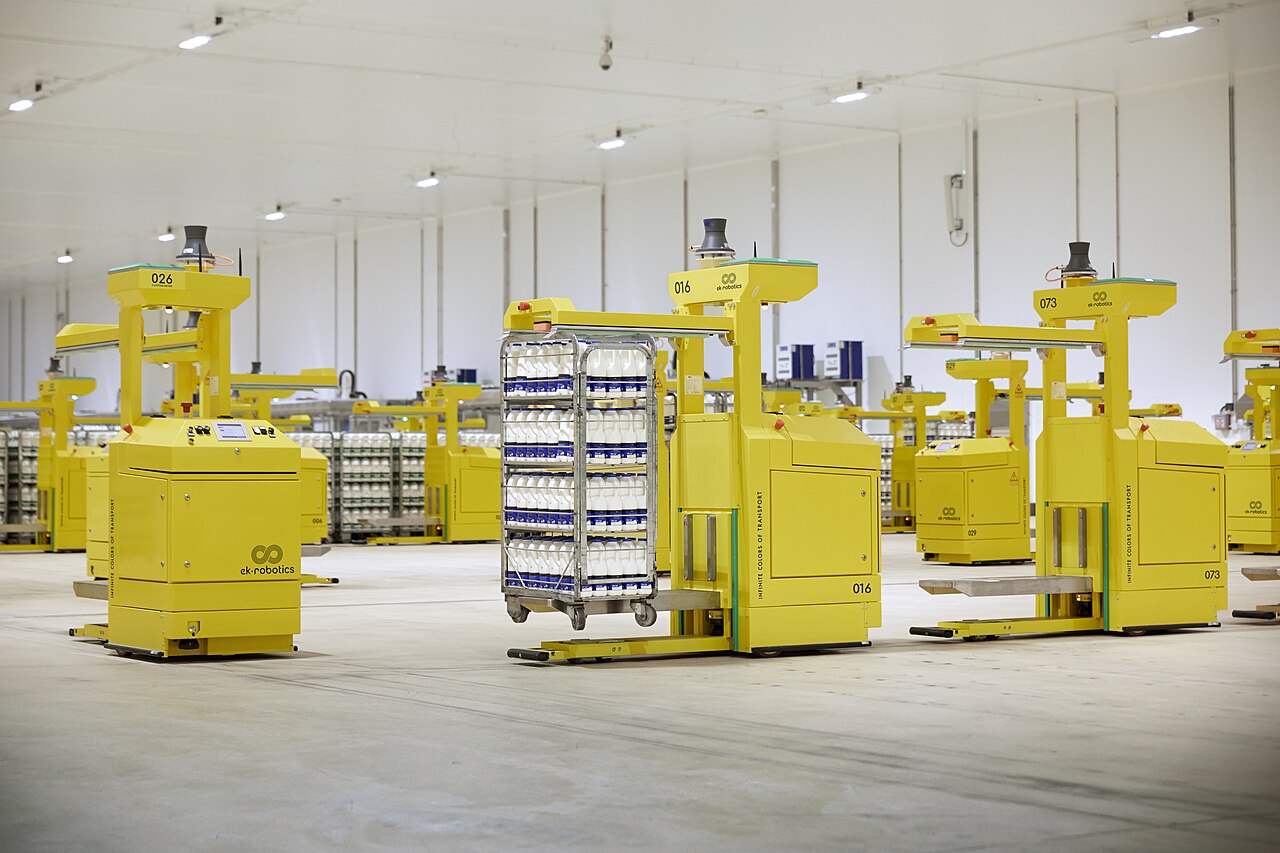
Automated Guided Vehicle
Driverless vehicle that follows a fixed path, magnetic tape, QR codes, or reflectors on the floor. Proven, low-risk, cost-effective when your routes are stable.
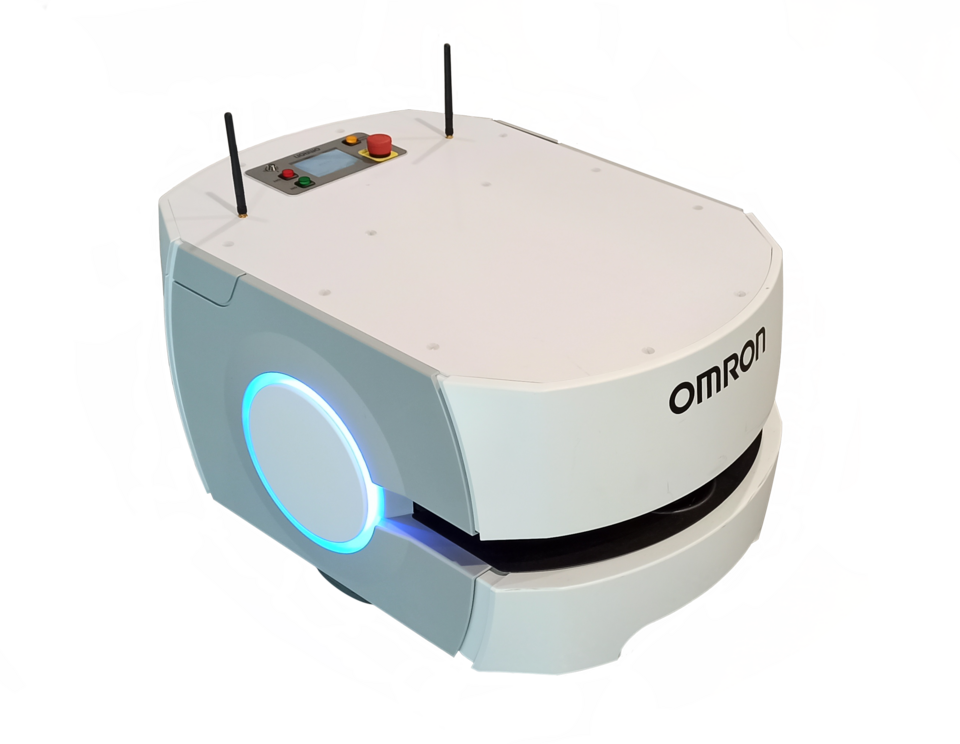
Autonomous Mobile Robot
Mobile robot with LIDAR + SLAM. Builds its own map of the space and navigates dynamically, around people, around obstacles, with no floor markings.
| AGV | AMR | |
|---|---|---|
| Navigation | Follows fixed paths, magnetic tape, QR codes, reflectors, or wires on the floor | Free navigation using onboard LIDAR + SLAM; understands the floor plan dynamically |
| Path changes | Path change = re-laying tape / re-marking the floor | Path change = software update; no physical changes |
| Obstacle handling | Stops and waits when path is blocked | Re-routes around the obstacle and continues |
| Installation effort | Higher, floor prep, tape/markers, fixed charging points | Lower, drop in, map the floor, set drop-off points |
| Upfront cost | Lower per unit | Higher per unit (LIDAR + compute + software) |
| Ongoing flexibility | Best when layout and routes are stable | Best when layout, products, or processes change often |
| Typical payload | 50 kg, 30 ton (cart-train tuggers to port containers) | 50 kg, 1500 kg (most plants run sub-500 kg) |
| Best fit | High-volume, repetitive routes, automotive, paper, beverage, textile | Mixed workflows, e-commerce fulfilment, hospitals, dynamic warehouses |
Four common form factors
The right AGV depends on what you're moving and how it's loaded. Tugger and unit-load cover most factory moves; forklift AGVs handle warehouses; conveyor-top fits high-speed packing lines.
Tugger AGV
Pulls a train of carts behind it, best for milk-run style material delivery between cutting / production / dispatch.
Unit-Load AGV
Carries one pallet, tote, or bin on a flat deck. Loaded by conveyor handoff or scissor-lift.
Forklift AGV
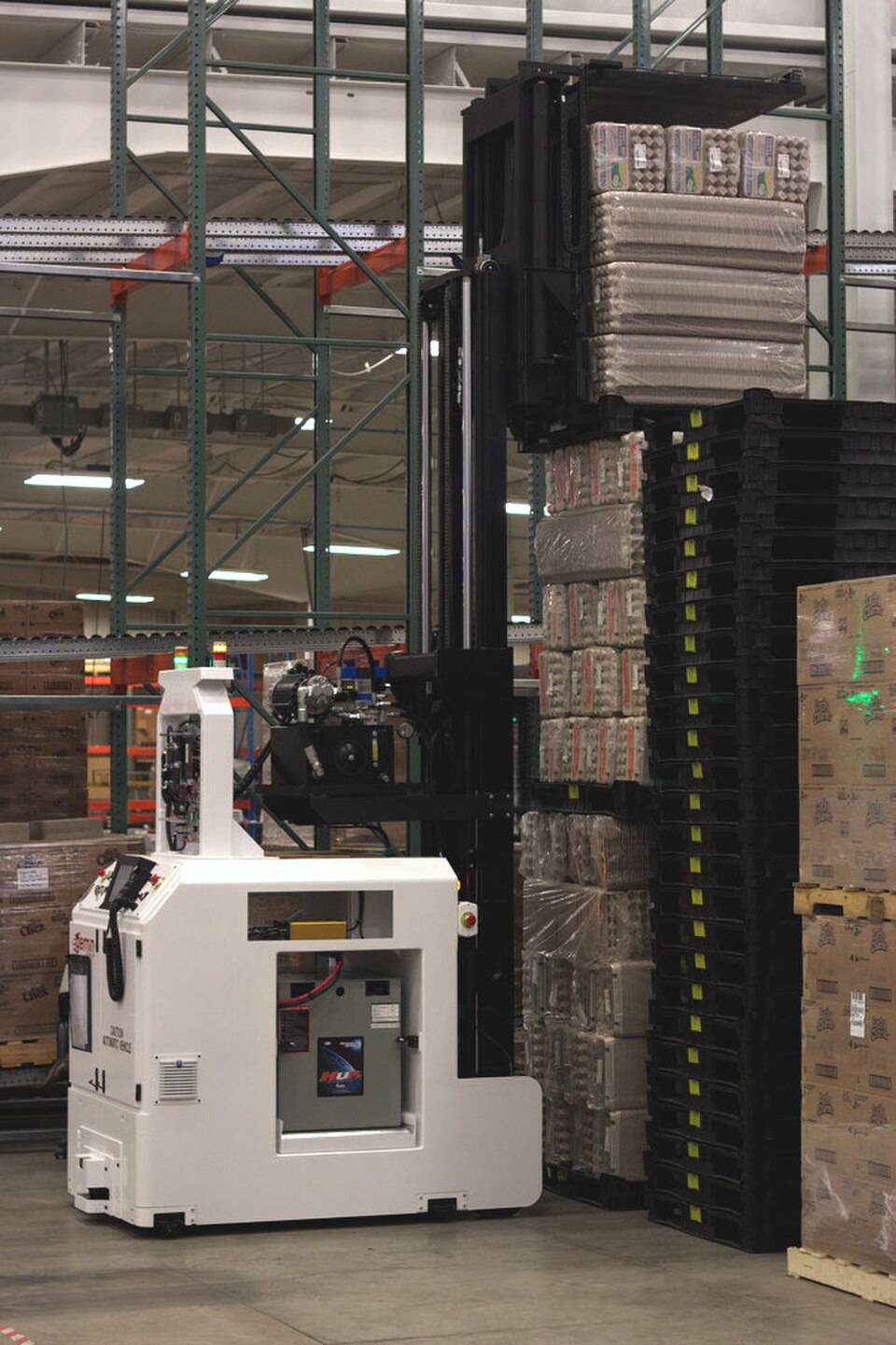
Same form factor as a manual reach truck or counterbalance forklift, but driverless. Handles racks and pallet stacks.
Conveyor-Top AGV
Flat-top with powered rollers or belt on the deck. Auto-loads and auto-unloads at fixed stations.
Free-Navigation AMR
LIDAR + SLAM lets it map any indoor space and route dynamically around people and obstacles.
Goods-to-Person AMR
Lifts and carries entire shelving units to a picking station, operator stays put, robot brings the work.
Mobile Manipulator
AMR base with a robot arm bolted on, can drive AND pick / place at the destination.
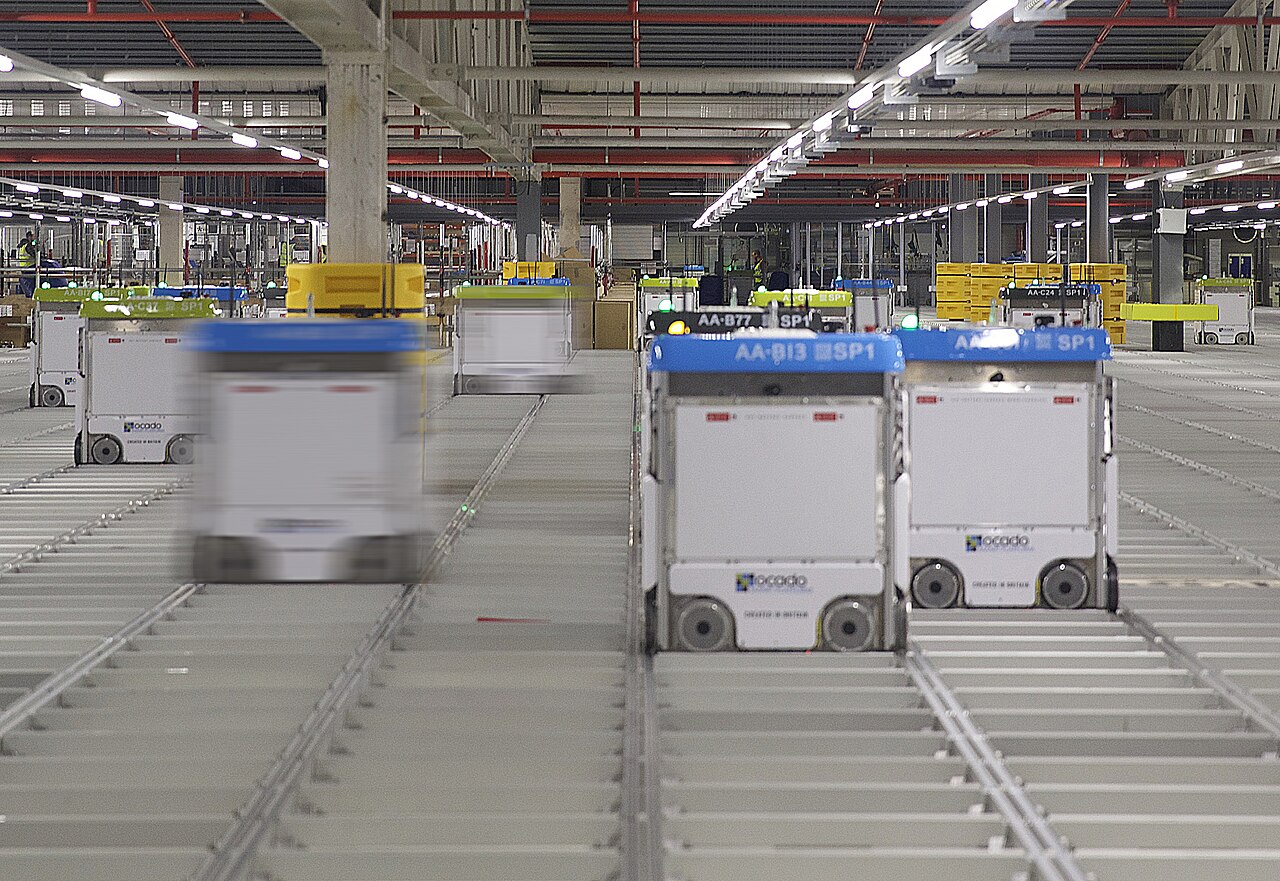
Three primary categories
AMRs are typically classified by what they carry and what task they perform: straight transport, shelf-lifting fulfilment, or carrying a manipulator arm for point-of-use tasks.
How robots know where to go
The single biggest design choice is how the vehicle locates itself. Below are the methods we use, ranked from simplest to most flexible.
Magnetic Tape
A 2-inch magnetic strip stuck to the floor. AGV follows it via magnetic sensor. Cheapest install, easiest to re-route by lifting tape.
QR Codes / Floor Markers
Grid of QR codes printed on the floor. Onboard camera reads them for position fix. Excellent accuracy at low cost.
Reflectors / Laser Triangulation
Reflective strips on walls + rotating laser scanner on the AGV. Common in older AGV installs and port environments.
LIDAR + SLAM
On-board LIDAR builds and maintains a live map. Robot localises itself within that map. Allows free navigation.
Visual SLAM
Cameras + AI replace LIDAR. Cheaper hardware, more compute-heavy, sensitive to lighting changes.
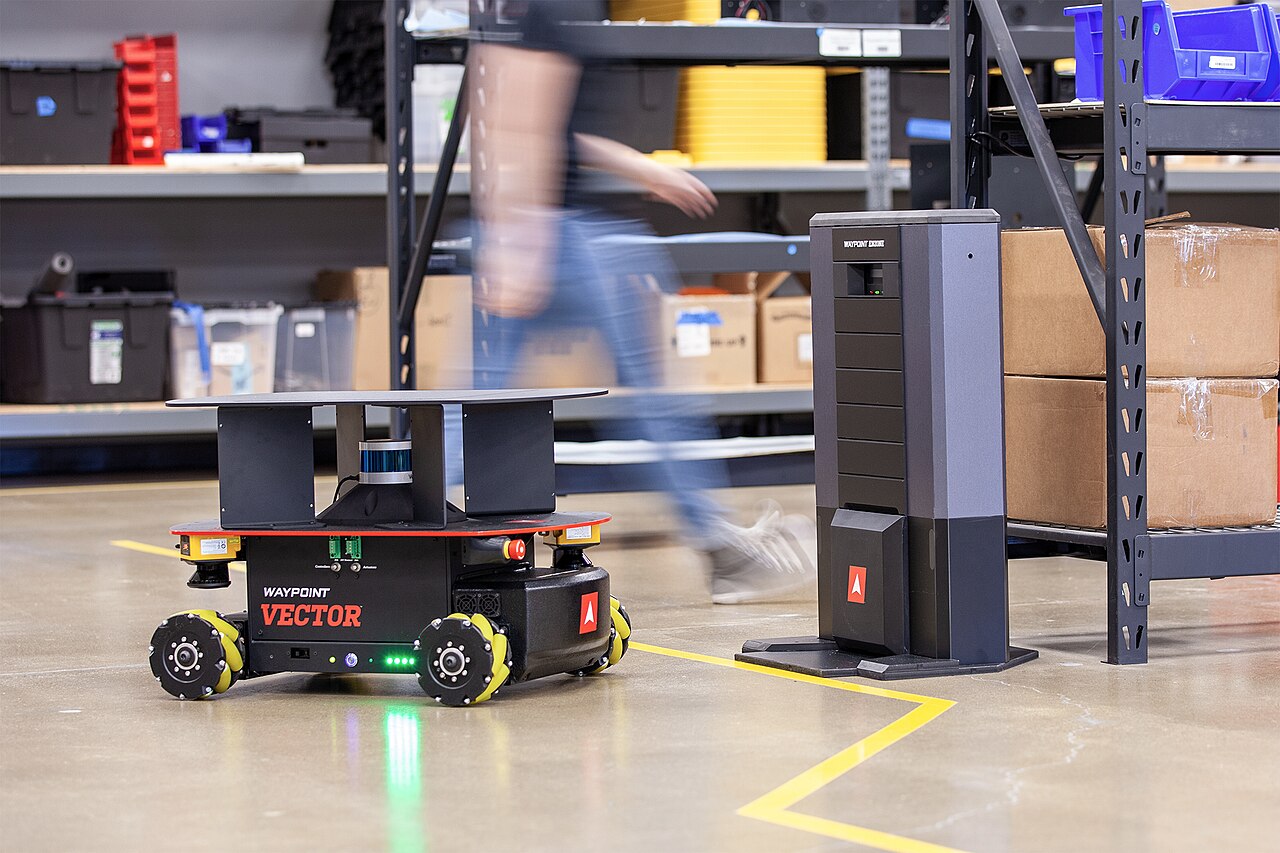
What's in a mobile robot
Whether AGV or AMR, every deployment is built from the same six layers, chassis, sensors, controller, fleet software, charging, and integration with your existing plant systems.
Drive Chassis
Differential, omni-wheel, or steered-wheel base sized for your payload, aisle width, and turn radius.
Safety Sensors
Class 3 safety LIDAR around the perimeter, contact bumpers, emergency stops, and audible warnings.
Onboard Controller
Industrial PC running navigation, mission control, and fleet-comms. ROS / Linux or vendor-proprietary.
Fleet Management Software
Central server that assigns missions, prevents collisions between robots, and reports KPIs. Talks to your WMS or MES.
Charging Infrastructure
Contact or wireless docks. Robots auto-return to charge when battery drops below threshold.
Integration Layer
PLC handshakes for door openers, conveyor calls, lift access, and MES/WMS sync.
Industries we serve
Mobile robotics replaces material-handler runs across most industrial settings. The pattern is the same, fixed start and end points, repeatable trips, more value for the operator than pushing carts.
Manufacturing
Move raw material to work cells, WIP between stations, and finished goods to packing. Reduce material-handler headcount and eliminate wait time on the line.
Warehousing & 3PL
Goods-to-person picking, replenishment, putaway, returns. Pair AGVs with fixed conveyors for hybrid throughput.
Textile & Garment
Cutting room to sewing lines, sewing to trim/QC, finished to dispatch. Tugger AGVs pull bundle trolleys on a milk-run schedule.
FMCG & Beverage
Pallet movement from production to staging, full-pallet load-out, cold-room access via forklift AGV.
Pharma & Healthcare
Sample and meal delivery in hospitals, sterile material handling in pharma plants, regulated paths with full audit logs.
Ports & Heavy Industry
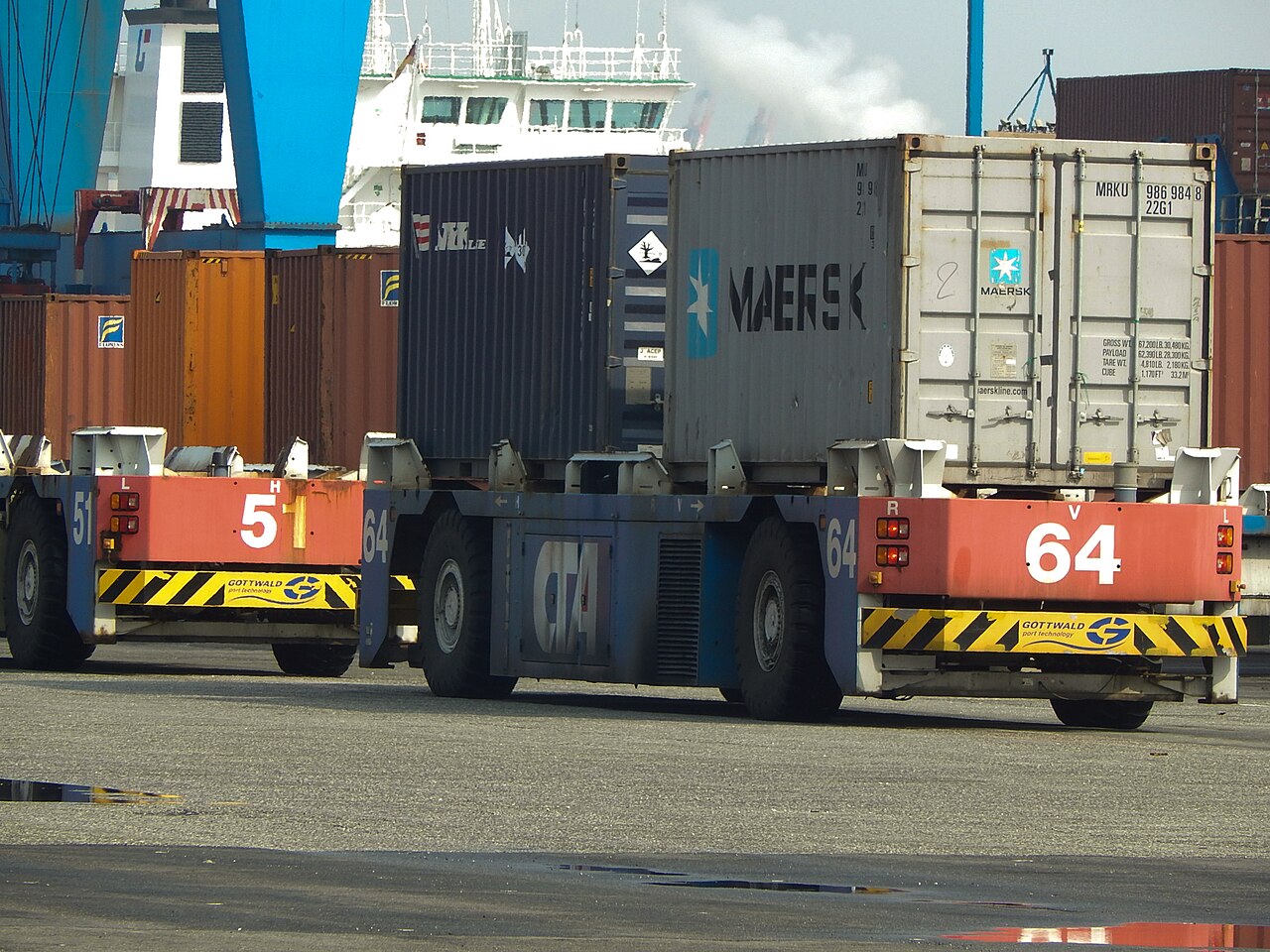
Container movement, heavy-load shuttles between yard and dock, the original AGV use case.
End-to-end mobile robotics integration
- Site survey & process mapping
We walk your plant, time the current trips, and document the routes and pain points before we propose anything.
- Solution design
AGV vs AMR recommendation, robot type, fleet size, charging strategy, and a layout drawing showing every route and stop.
- Hardware sourcing
We work with proven AGV / AMR vendors and our own custom-build options, so you get the right tool, not whatever a single manufacturer happens to sell.
- Install, commission, integrate
Floor prep, mapping, fleet manager setup, PLC handshakes with doors and conveyors, MES / WMS hooks.
- Training & local support
Operator training, supervisor training, spares on hand. Same-day response across Sri Lanka, no waiting for an overseas technician.
Thinking about AGV or AMR for your plant?
Send us a quick note about your facility, what you're moving today, and the trips that hurt. We'll come back within 48 hours with a recommendation and a site-visit plan.
AGV & AMR, the common questions
What is the difference between AGV and AMR?+
AGV (Automated Guided Vehicle) follows a fixed path defined by magnetic tape, QR codes, or reflectors on the floor, proven, lower-cost, best for stable routes. AMR (Autonomous Mobile Robot) uses LIDAR and SLAM to navigate dynamically around obstacles, more flexible, higher cost, best when layouts change often.
How much does an AGV cost in Sri Lanka?+
AGV cost depends on payload class, fleet size, navigation type, and integration scope. Cerox sizes each deployment to the customer's actual workflow, get in touch via WhatsApp or contact form for an indicative range on your specific use case.
Can Cerox build the AGV or is it imported?+
Cerox designs and builds AGVs in Sri Lanka. We source proven BLDC drive components and assemble, integrate, and support the full system locally. This gives you same-day support and avoids the multi-week wait for an overseas vendor's technician.
How long does AGV deployment take?+
Typical contract-to-live timeline for a Cerox-built AGV is 10–16 weeks: 2 weeks discovery and site survey, 6–8 weeks build and integration, 1 week install and floor-prep, 1 week commissioning and operator training. Fleet expansion is faster, subsequent units in 3–4 weeks each.
What industries use AGVs?+
AGVs are common in manufacturing (work-cell material delivery), warehousing and 3PL (goods-to-person, putaway, picking), garment and textile (cutting-room to sewing-line bundle delivery), FMCG and beverage (pallet movement), pharma and healthcare (sterile material handling, sample delivery), and ports (heavy-load shuttles).
Does an AGV need WiFi to work?+
For navigation: no. A magnetic-tape AGV follows the tape using onboard sensors, no WiFi needed for movement. For fleet management (dashboards, mission assignment, multi-AGV coordination): yes, the AGV needs WiFi to talk to a central server. Standard plant WiFi is enough for most installations.
Can the AGV integrate with our existing MES or ERP?+
Yes. Cerox AGVs can integrate with Optitex, Lectra, Gerber, and most cutting-room software, as well as MES/ERP systems via REST API, MQTT, OPC UA, or direct database hooks. Microsoft and Linux server environments are both supported.
What payload can an AGV handle?+
Cerox builds across payload classes: micro/tote-mover (30–100 kg), light unit-load (100–300 kg), medium unit-load (300–700 kg), and pallet-class (700–1500 kg). Tugger AGVs pull cart trains up to several tons. We size the AGV to your actual workflow.