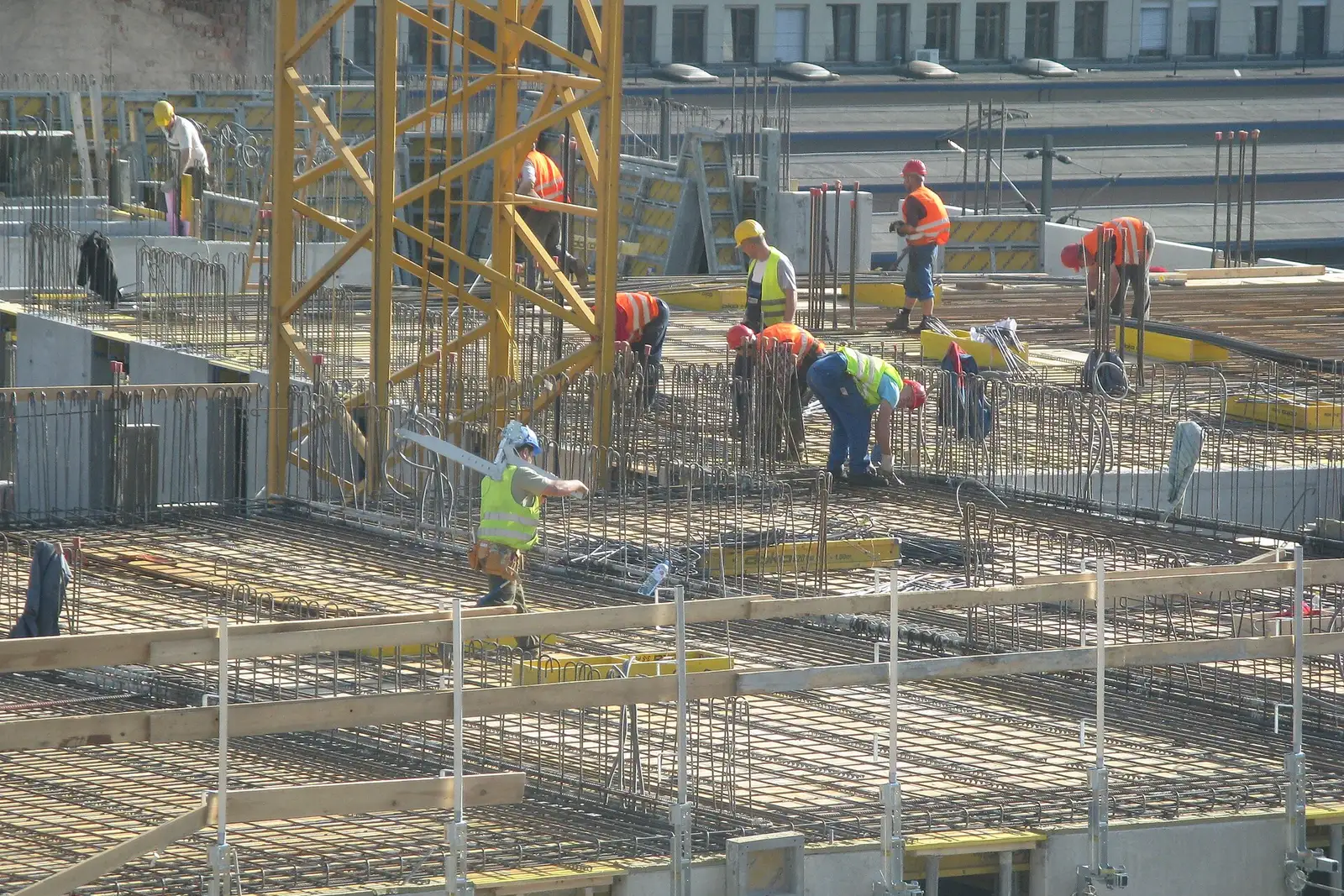
Overhead view of construction workers in hard hats and high visibility vests on a building site
All machine vision applications
Computer Vision · Safety

AI PPE Detection and Workplace Safety Monitoring

AI safety monitoring turns the CCTV cameras you already have into a safety system. It checks that people are wearing the right PPE, warns when someone walks into a danger zone or near a moving forklift, and spots smoke, fire and fallen workers, then alerts your supervisors and keeps a record for audits.

PPE & Safety Monitoring at a glance

What it detects
Missing helmets, vests, gloves, goggles, masks, ear defenders, hairnets and beard nets; people in danger zones; forklift and pedestrian near misses; smoke, flame and fallen workers.
What it runs on
Your existing IP CCTV cameras where the view is suitable, plus extra cameras where it is not, with AI processing on a computer on your site.
What happens
Alerts to a screen, siren, supervisor phone or email within seconds, with a snapshot of the event.
What you get
Compliance rates by area and shift, a log of every event with images, and evidence for audits and ISO 45001.
Definition

What is AI PPE detection and safety monitoring?

AI PPE detection uses computer vision models to watch camera feeds and recognise people and the protective equipment they are wearing. When someone is missing a required item in a zone that needs it, the system raises an alert and records the event.

The same video analytics can watch for other unsafe situations: a person entering a marked danger zone around a press, robot or conveyor, a forklift and a pedestrian getting too close, smoke or flame in a large open floor, or a worker who has fallen and not moved. Each rule is set per camera and per area, so a food line can require hairnets while a loading bay requires vests.

Because it watches people, it has to be designed for privacy. We process video on a computer at your site rather than in the cloud, store event snapshots rather than continuous footage where possible, and set retention limits, in line with the Personal Data Protection Act No. 9 of 2022.

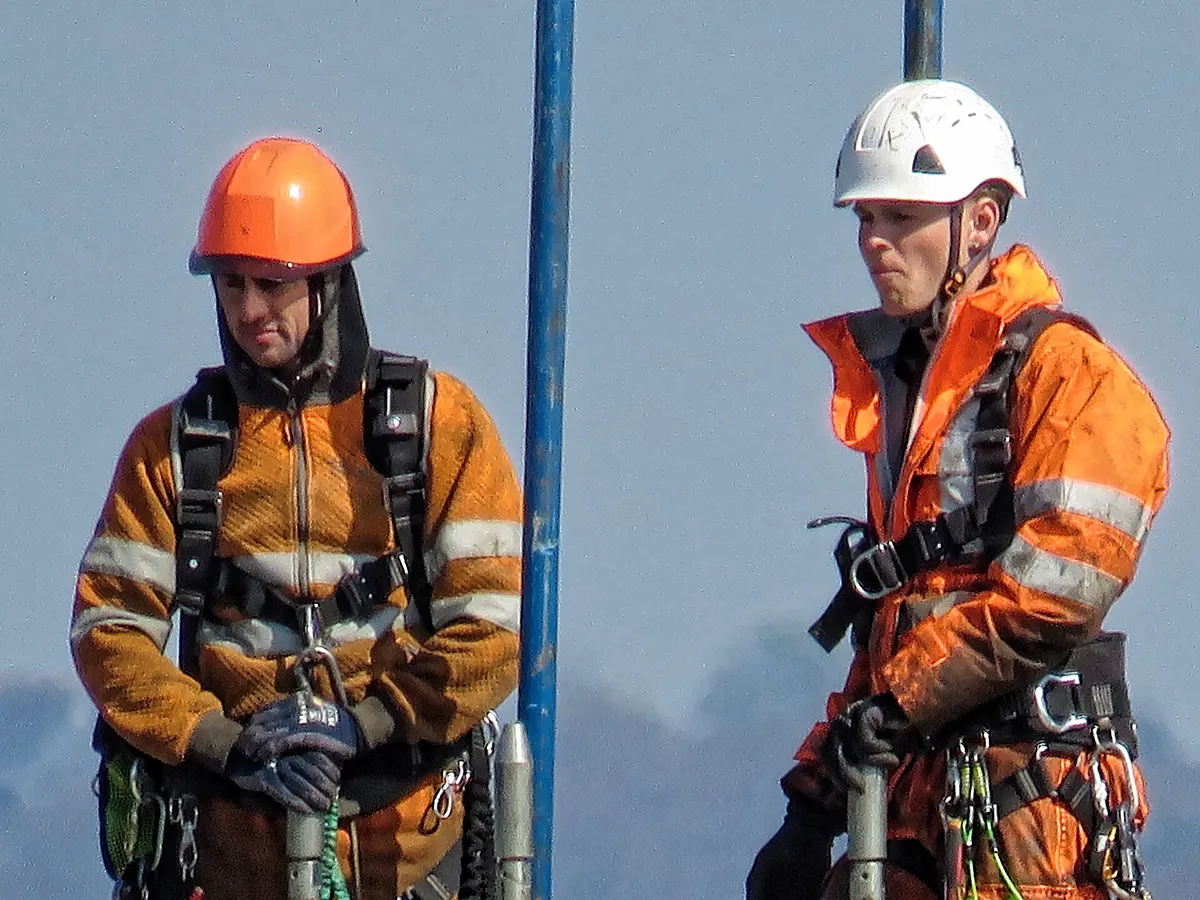
Two workers wearing hard hats, high visibility clothing and fall protection harnesses
Hard hats, high visibility clothing and harnesses. Each item can be checked automatically in the areas that require it.
The problem

Why safety rules are hard to enforce

  • Supervisors cannot watch every area on every shift.
  • PPE use drops when nobody is looking, and the drop is invisible until an accident.
  • Near misses between forklifts and people go unreported.
  • Ceiling smoke detectors react late in high, open buildings.
  • Auditors ask for evidence of compliance that paper checklists cannot give.
How it works

How AI safety monitoring works, step by step

STEP 1SurveySTEP 2ZoneSTEP 3DetectSTEP 4AlertSTEP 5Report
  1. STEP 1

    Survey the cameras

    We check which existing cameras have a usable view, where extra cameras are needed, and which rules apply in each area.

  2. STEP 2

    Define zones and rules

    Each camera view is divided into zones with their own rules: required PPE, no-entry areas, forklift lanes, smoke watch.

  3. STEP 3

    Detect on site

    AI models running on a computer at your plant analyse the video streams continuously. Video does not need to leave the site.

  4. STEP 4

    Alert in seconds

    A violation triggers a siren, screen alert, supervisor message or email, with a snapshot so the supervisor sees exactly what happened.

  5. STEP 5

    Report and improve

    Compliance rates, near-miss counts and event images by area and shift show where training, layout or guarding needs to change.

The technology

Methods that make it reliable

Object detection models

Deep learning detectors, of the kind used in modern YOLO-family models, locate people, helmets, vests, gloves, masks, hairnets, forklifts and vehicles in each frame.

Zone and line rules

Polygons drawn on each camera view define where a rule applies, so a person is only flagged for a missing hairnet inside the food zone, or for crossing into a press guarding area.

Tracking and dwell time

People and vehicles are tracked across frames, which allows proximity warnings, man down detection when someone stops moving on the floor, and counts of people in an area.

Smoke and flame recognition

Models trained on smoke and flame watch large spaces, warehouses and stores, where a camera can see smoke long before it reaches a ceiling detector.

Edge processing

Inference runs on an industrial computer with a GPU at your site. It keeps working if the internet goes down and keeps video under your control.

Capabilities

What it can check

  • Hard hats and helmets
  • High visibility vests
  • Safety gloves
  • Goggles and face shields
  • Masks and respirators
  • Ear defenders
  • Hairnets and beard nets
  • Safety footwear zones
  • Danger zone entry
  • Forklift and pedestrian proximity
  • Smoke and flame
  • Man down and lone worker
  • Phone use at machines
  • Smoking in no-smoking areas
Industries

Where it is used

Construction and infrastructureCement, steel and quarriesTyre and rubber productsFood, beverage and dairyPharmaceuticalsApparel and textile factoriesWarehouses, ports and logistics
Sample projects

How a project is scoped

Two example project scopes showing how the station, the checks and the outputs are defined. Every plant is different, so the final configuration is confirmed after a feasibility study on your own parts.

Example scope · Food factory

Hairnet, mask and handwash compliance on a food line

The situation: A food manufacturer must show buyers and auditors that GMP rules are followed on every shift, and relies on supervisor spot checks.

Cameras
Existing CCTV at line entrances plus one camera over the handwash station
Detects
Missing hairnets, beard nets and masks; skipped handwashing before entry
Output
Supervisor alert with snapshot, compliance rate per shift
Extra
Monthly compliance report for buyer audits
Example scope · Warehouse

Forklift and pedestrian safety in a distribution centre

The situation: A warehouse runs forklifts in aisles shared with pickers and has had near misses that nobody reported.

Cameras
Cameras over aisle junctions and loading bays
Detects
Pedestrians too close to moving forklifts, people in forklift-only lanes, missing vests
Output
Warning light and buzzer at the junction, event log with images
Extra
Near-miss heat map to redesign walkways
What is in the system

Typical components

  • Existing IP CCTV cameras where suitable
  • Additional fixed or PTZ cameras
  • Industrial edge computer with GPU
  • Sirens, beacons and warning lights
  • Alert delivery to phones, email or screens
  • Dashboard and compliance reports

Cameras and lenses, supplied locally

Industrial cameras, lenses, line-scan cameras and code readers are available through our machine vision catalog, quoted with delivery to Sri Lanka. We select the hardware for your application during the feasibility study.

Browse the hardware catalog
How we work

Proven on your parts before you commit

Every product, surface and line behaves differently under a camera, so every project starts with evidence from your own material.

  1. PHASE 1

    Discovery

    A site visit to understand your product, line speed, quality criteria and where the check should sit.

  2. PHASE 2

    Feasibility study

    We image your good and defective samples and show what the system can reliably detect. This is the go or no-go.

  3. PHASE 3

    Pilot station

    One station on one line, running beside your inspectors until results match and your team trusts them.

  4. PHASE 4

    Rollout and support

    More lines, integration with your PLC and systems, and local support from our Sri Lankan engineering team.

FAQ

PPE & Safety Monitoring: common questions

Can it use our existing CCTV cameras?

+

Usually yes, for cameras with an IP video stream and a clear view of the area. Detecting small items such as gloves or hairnets needs enough resolution on the person, so some areas may need an extra camera or a closer view. We survey the cameras first.

Does the video go to the cloud?

+

No, it does not need to. The AI runs on a computer at your site, so video stays on your network. Only alerts and snapshots are sent to supervisors, and storage can be limited to events rather than continuous footage.

Is this allowed under Sri Lankan privacy law?

+

Workplace safety monitoring can be done lawfully, but the Personal Data Protection Act No. 9 of 2022 applies to images of identifiable people. Good practice is to tell employees what is monitored and why, process on site, avoid face recognition unless there is a clear need, and set retention limits. We design the system around those principles.

Does it identify individual workers?

+

It does not have to. PPE and zone monitoring can work on anonymous detections, reporting compliance by area and shift. Linking events to individuals is possible but is a policy decision for you, with privacy implications.

How quickly does it alert?

+

Typically within a few seconds of a violation being seen, depending on the number of cameras and the computer used. Rules can include a short grace period so someone adjusting a helmet is not flagged.

Can it detect fire and smoke?

+

Yes, as an early warning alongside your fire detection system, not as a replacement for it. Cameras can see smoke in large open floors and warehouses before it reaches ceiling detectors, which is where it adds most value.

Send us a few sample parts

Tell us what you need to check and share some good and faulty samples. We will show you what a camera can reliably see before you commit to anything.

Photographs show representative plants and equipment, not Cerox installations or client sites. Diagrams by Cerox Engineering. Photo credits, via Wikimedia Commons: Construction site in Vienna by Yair Haklai, CC BY-SA 3.0; Workers in hard hats and high visibility clothing by Acabashi, CC BY-SA 4.0.