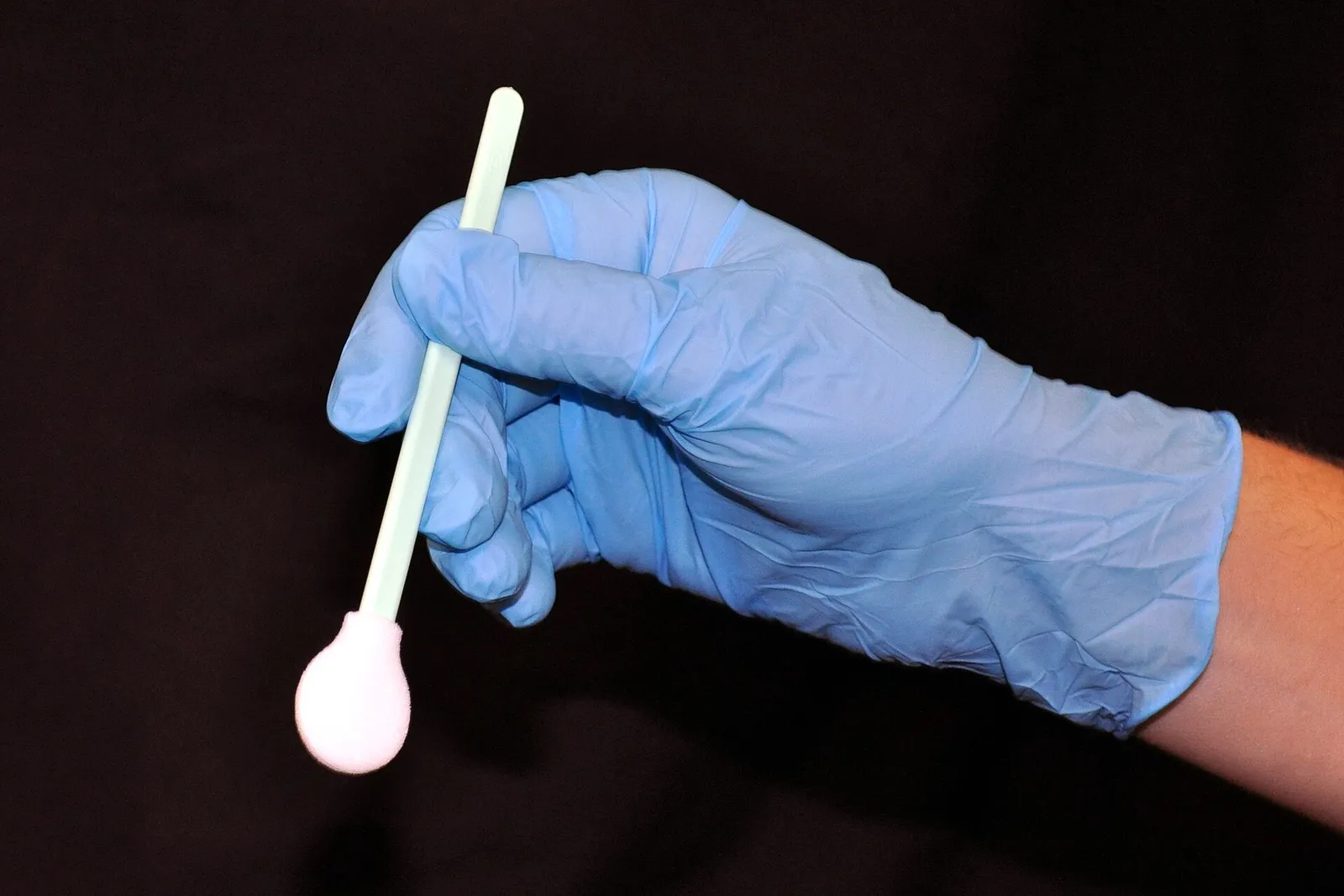
Hand wearing a blue nitrile examination glove holding a swab against a black background
All machine vision applications
Machine Vision · Rubber

Rubber, Latex and Nitrile Glove Inspection Systems

Glove inspection checks every glove for holes, tears, thin spots, stains and particles before it is packed. Cameras inspect gloves on the former line or after stripping, reject defective ones automatically, and give the plant defect data by line and former, which manual checks cannot provide at glove-line speeds.

Rubber Glove Inspection at a glance

What it finds
Holes and pinholes, tears, thin spots, stains and discolouration, embedded particles, unstripped or folded cuffs, missing beads and shape faults.
Where it sits
On the dipping line while gloves are on the formers, or after stripping, on the conveyor before packing.
How it decides
Backlight and reflected light imaging, with deep learning trained on good gloves to flag anything abnormal.
What you get
Automatic rejection, defect counts by line and former, and data that points to dipping, leaching or curing problems.
Definition

What is automated glove inspection?

Automated glove inspection uses cameras and lighting to examine gloves for defects at production speed. It is used on examination, surgical, household and industrial gloves made from natural rubber latex, nitrile and other polymers.

Glove lines run very fast, with thousands of formers per line, so manual visual inspection can only ever be partial. Vision inspects every glove, either on the former, where a defective glove can be marked and its former flagged for cleaning, or after stripping, where it can be rejected before packing.

Vision inspection complements, rather than replaces, the quality tests that standards require. Medical gloves are still sampled and water-leak tested for freedom from holes under EN 455-1 or ASTM D5151, with AQL sampling to ISO 2859-1. Vision reduces how many defective gloves reach that sample in the first place.

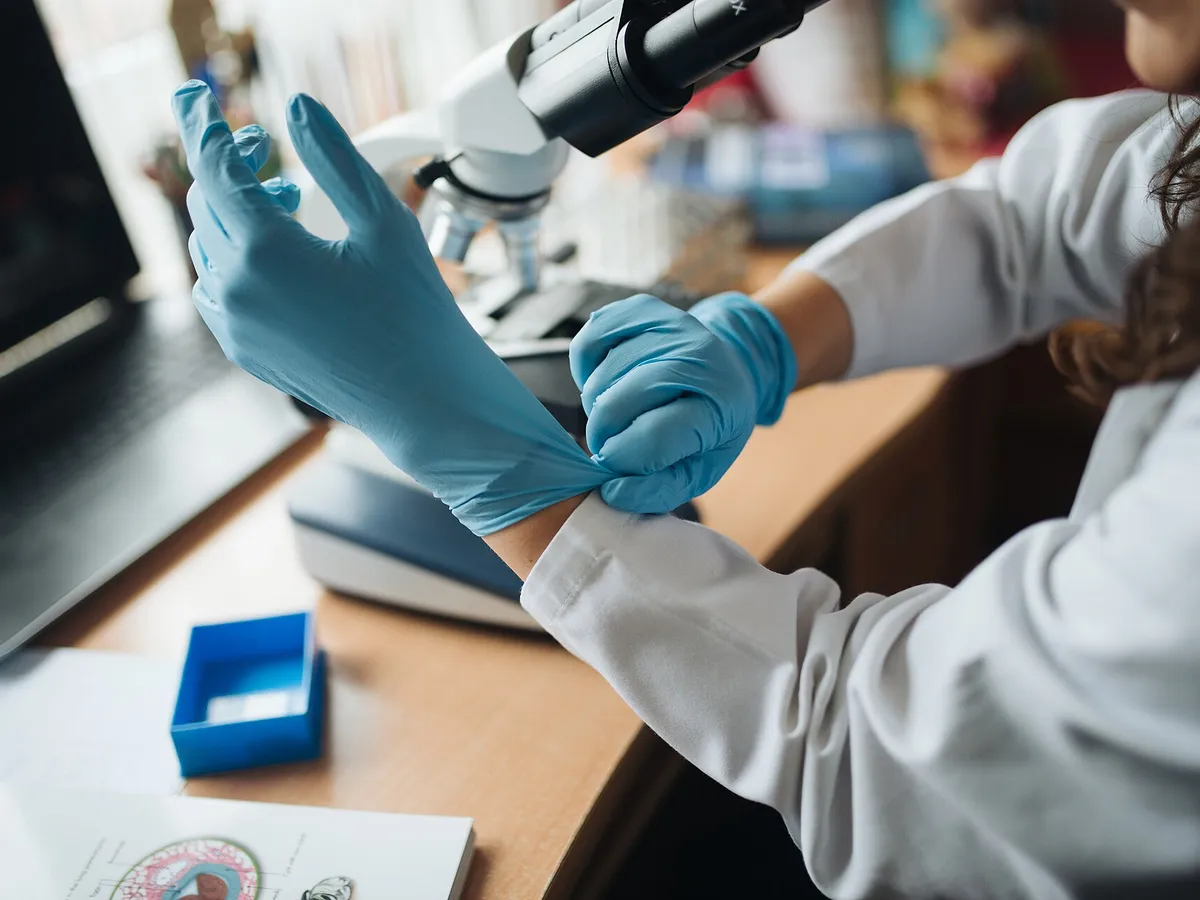
Laboratory technician pulling on blue protective gloves at a lab bench
Examination gloves in use. In medical and laboratory work a glove that leaks is a failure, which is why freedom from holes is tested by standard.
The problem

Why glove defects reach customers

  • Line speeds are far beyond what people can inspect glove by glove.
  • Pinholes and thin spots are small and easy to miss on a moving line.
  • A dirty or damaged former keeps producing the same defect until someone notices.
  • Failed AQL lots mean re-inspection, downgrading or rejection of whole batches.
  • Without defect data by former, process problems take longer to trace.
How it works

How rubber glove inspection works, step by step

STEP 1PresentSTEP 2LightSTEP 3DetectSTEP 4RejectSTEP 5Trend
  1. STEP 1

    Present the glove

    Gloves are imaged on the formers as they pass the station, or flat on a conveyor after stripping.

  2. STEP 2

    Light through and on

    Backlighting through the film reveals holes, thin spots and particles; reflected light shows stains, discolouration and surface faults.

  3. STEP 3

    Detect defects

    Rule-based tools catch clear defects; deep learning trained on good gloves catches subtle and variable ones.

  4. STEP 4

    Reject and flag

    Defective gloves are rejected or marked, and the former that produced them is identified for cleaning or replacement.

  5. STEP 5

    Trend the process

    Defect counts by line, former and defect type show when dipping, leaching or curing conditions are drifting.

The technology

Methods that make it reliable

Backlight imaging

Light shining through the glove film makes holes bright and thin spots lighter, and shows embedded particles as dark marks.

Reflected light imaging

Light from the camera side reveals stains, discolouration, surface roughness, flow marks and cuff bead defects.

Former tracking

Each image is tied to a former position on the chain, so repeat defects point to a specific former that needs attention.

Deep learning anomaly detection

A model trained mostly on good gloves learns normal variation in colour, texture and shape, and flags anything unusual, which suits rare and varied defects.

High speed triggering

Cameras are synchronised to the line so every glove is imaged, even at full production speed.

Capabilities

What it can check

  • Holes and pinholes
  • Tears
  • Thin spots
  • Stains and discolouration
  • Embedded particles
  • Unstripped or folded cuffs
  • Missing or faulty beads
  • Shape and size faults
  • Coating defects on supported gloves
  • Double or stuck gloves
Industries

Where it is used

Medical examination glovesSurgical glovesHousehold glovesIndustrial and supported glovesCleanroom gloves
Sample projects

How a project is scoped

Two example project scopes showing how the station, the checks and the outputs are defined. Every plant is different, so the final configuration is confirmed after a feasibility study on your own parts.

Example scope · Examination gloves

Inspection on the former line

The situation: A glove manufacturer runs fast nitrile lines and finds defects mainly at AQL sampling, too late to correct the process for that lot.

Station
Cameras with backlight and reflected light on the formers after curing
Detects
Holes, thin spots, particles and stains
Output
Defective gloves marked for rejection, formers flagged for cleaning
Extra
Defect rate by line and former, shown live to the line supervisor
Example scope · Household gloves

Post-stripping inspection before packing

The situation: A household glove maker packs gloves by hand and wants consistent cosmetic and hole checks before packing.

Station
Conveyor station with backlight and top cameras after stripping
Detects
Holes, tears, thin areas, colour faults and cuff defects
Output
Automatic rejection into a bin before the packing table
Extra
Defect statistics by shift and size
What is in the system

Typical components

  • High speed area-scan cameras
  • Backlight panels and reflected light
  • Encoder or chain position input
  • Industrial PC with GPU
  • Reject or marking mechanism
  • Defect dashboard by line and former

Cameras and lenses, supplied locally

Industrial cameras, lenses, line-scan cameras and code readers are available through our machine vision catalog, quoted with delivery to Sri Lanka. We select the hardware for your application during the feasibility study.

Browse the hardware catalog
How we work

Proven on your parts before you commit

Every product, surface and line behaves differently under a camera, so every project starts with evidence from your own material.

  1. PHASE 1

    Discovery

    A site visit to understand your product, line speed, quality criteria and where the check should sit.

  2. PHASE 2

    Feasibility study

    We image your good and defective samples and show what the system can reliably detect. This is the go or no-go.

  3. PHASE 3

    Pilot station

    One station on one line, running beside your inspectors until results match and your team trusts them.

  4. PHASE 4

    Rollout and support

    More lines, integration with your PLC and systems, and local support from our Sri Lankan engineering team.

FAQ

Rubber Glove Inspection: common questions

Can machine vision find pinholes in gloves?

+

Yes. Backlighting through the glove film makes holes appear as bright spots, and thin areas as lighter regions. The smallest detectable hole depends on camera resolution, glove colour and line speed, which we confirm on your gloves during the assessment.

Does vision inspection replace the water leak test?

+

No. For medical gloves, freedom from holes is tested on samples by water leak testing under EN 455-1 or ASTM D5151, with AQL sampling to ISO 2859-1. Vision inspects every glove on the line, so fewer defective gloves reach the sample and lots are less likely to fail.

Can it inspect gloves on the formers?

+

Yes. Inspecting on the formers lets the system identify which former produced a defect, so dirty or damaged formers can be cleaned or replaced before they produce more rejects.

Does it work on different glove colours?

+

Yes, but lighting and models are set up per colour and material, since blue nitrile, white latex and black gloves behave differently under backlight and reflected light.

Can it keep up with glove line speeds?

+

Cameras are triggered from the line so every glove is imaged at full speed. Very fast lines may need more than one camera per side or per lane, which is decided in the design.

Send us a few sample parts

Tell us what you need to check and share some good and faulty samples. We will show you what a camera can reliably see before you commit to anything.

Photographs show representative plants and equipment, not Cerox installations or client sites. Diagrams by Cerox Engineering. Photo credits, via Wikimedia Commons: Nitrile glove by BlueThunderTechnologies, CC BY-SA 4.0; Lab technician putting on protective gloves by Shixart1985, CC BY 2.0.