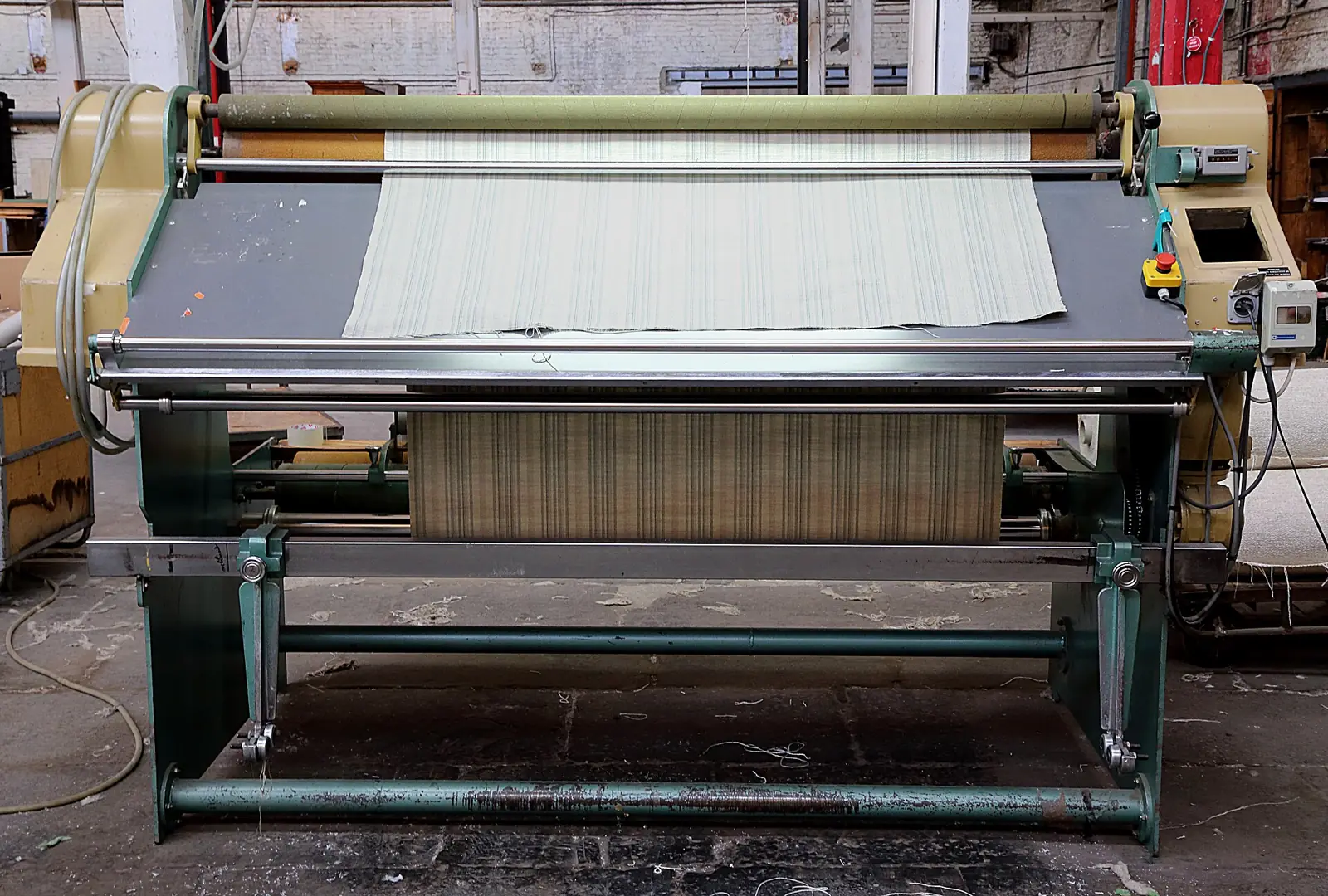
Fabric inspection machine with a roll of fabric running over the inspection table
All machine vision applications
Machine Vision · Textiles

Automated Fabric Inspection Systems

Automated fabric inspection uses line-scan cameras mounted across a fabric inspection frame to find, classify and map every defect in a roll as it runs, then grades the roll to the 4-point system. Inspectors stop searching and start confirming.

Automated Fabric Inspection at a glance

What it finds
Holes, stains, oil spots, slubs, broken ends and picks, dropped stitches, needle lines, creases and print faults.
How it sees
Line-scan cameras across the full width, synchronised to fabric speed by an encoder, with reflected and transmitted light.
How it grades
Penalty points per defect under the 4-point system (ASTM D5430), or your buyer’s own grading rules.
What you get
A defect map and roll report for every roll, plus images of each defect for claims and supplier feedback.
Definition

What is automated fabric inspection?

Fabric inspection is the check every roll gets before it is cut: an inspector watches fabric run over a lit inspection table, stops at each defect, marks it and records penalty points. It decides whether a roll is accepted, downgraded or returned to the mill.

Automated fabric inspection puts cameras on that same frame. Every metre of the full width is imaged, defects are detected and classified by software, and each one is logged with its position. The result is a consistent grade for every roll and a record you can send back to the supplier.

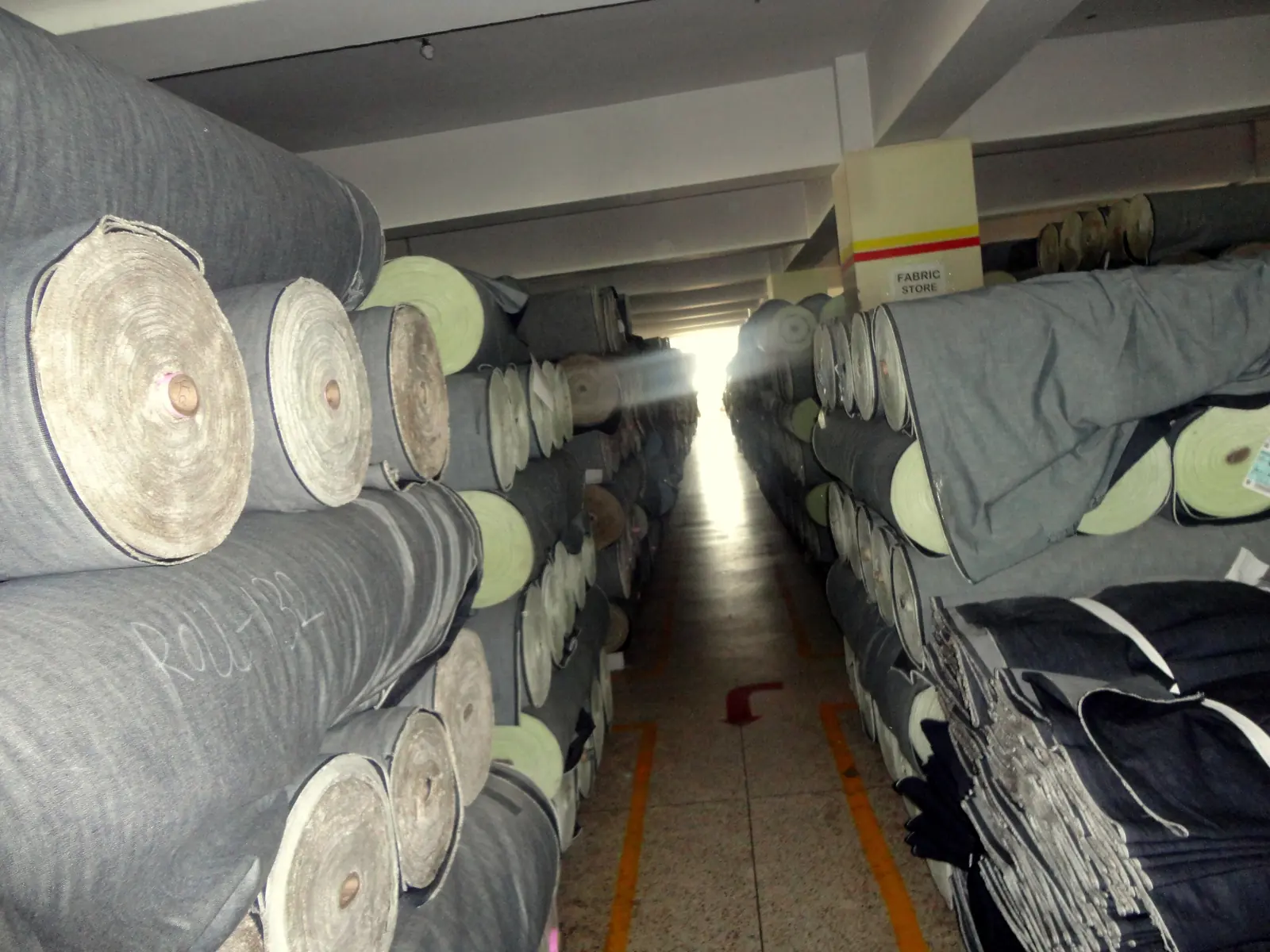
Rolls of denim fabric stacked on racks in a fabric store
Every roll that reaches the cutting room was accepted at inspection. Automating that gate protects everything downstream.
The problem

Why manual fabric inspection misses defects

  • Inspectors watch fast-moving fabric for hours, and attention drops long before the shift ends.
  • Wide fabric means the edges get less attention than the centre.
  • Small or low-contrast defects on dark or patterned fabric are easy to miss.
  • Points and positions are written by hand, so roll reports are slow and hard to audit.
  • Defects found after cutting cost far more than defects found at inspection.
How it works

How automated fabric inspection works, step by step

STEP 1RunSTEP 2ImageSTEP 3DetectSTEP 4GradeSTEP 5Report
  1. STEP 1

    Fabric runs on your frame

    Cameras mount on an existing inspection frame or a new one. An encoder tracks fabric speed and length so every image is tied to a position in the roll.

  2. STEP 2

    Full-width imaging

    Line-scan cameras build a continuous image across the whole width. Reflected light shows surface faults; transmitted light from below shows holes, thin places and weave faults.

  3. STEP 3

    Detect and classify

    Software finds anything that differs from the fabric around it and classifies it: hole, stain, slub, broken end, dropped stitch and so on. Deep learning handles patterned and textured fabrics.

  4. STEP 4

    Grade the roll

    Each defect is scored by size under the 4-point system or your buyer’s rules, and the roll is graded as it finishes.

  5. STEP 5

    Map and report

    The operator confirms flagged defects on screen. A defect map, roll report and defect images are saved and can drive cut optimisation.

The technology

Methods that make it reliable

Line-scan cameras

A line-scan camera captures one line of pixels at a time, so a moving web of any length becomes one continuous image with no gaps or overlaps.

Reflected and transmitted light

Top lighting reveals stains, oil spots and print faults. Back lighting through the fabric reveals holes, thin places, broken ends and missing picks.

Deep learning classification

Trained on examples of your own fabrics and defects, a neural network separates real defects from normal texture, slub yarn effects and patterns.

Encoder synchronisation

A wheel encoder on the fabric keeps image scale constant as speed changes and gives every defect an exact metre position in the roll.

Capabilities

What it can check

  • Holes and cuts
  • Stains and oil spots
  • Slubs and thick places
  • Broken ends and picks
  • Dropped stitches and needle lines
  • Barré and streaks
  • Creases and crease marks
  • Misprints and registration faults
  • Width and edge faults
Industries

Where it is used

Apparel manufacturingKnitting millsWeaving millsDenimTechnical textilesHome textiles
Sample projects

How a project is scoped

Two example project scopes showing how the station, the checks and the outputs are defined. Every plant is different, so the final configuration is confirmed after a feasibility study on your own parts.

Example scope · Knit fabric

Camera retrofit on an existing inspection frame

The situation: A knitting plant inspects every roll by hand and wants consistent grading without replacing its frames.

Station
Line-scan camera bar and lighting fitted to the current frame
Detects
Holes, dropped stitches, needle lines, stains and barré
Output
4-point grade and defect map per roll, printed roll ticket
Extra
Defect images shared with the knitting floor for root cause
Example scope · Incoming woven fabric

Supplier roll audit at goods-in

The situation: A garment plant receives woven rolls from several mills and needs evidence when it rejects one.

Station
Inspection frame at goods-in with cameras and transmitted light
Detects
Broken ends and picks, slubs, holes, stains, width faults
Output
Roll report with defect images and positions, accept or return
Extra
Supplier scorecard built from every roll inspected
What is in the system

Typical components

  • Line-scan colour or monochrome cameras
  • High-intensity LED line lights, top and back
  • Rotary encoder on the fabric
  • Industrial PC with GPU for deep learning
  • Operator touchscreen at the frame
  • Roll ticket printer and report export

Cameras and lenses, supplied locally

Industrial cameras, lenses, line-scan cameras and code readers are available through our machine vision catalog, quoted with delivery to Sri Lanka. We select the hardware for your application during the feasibility study.

Browse the hardware catalog
How we work

Proven on your parts before you commit

Every product, surface and line behaves differently under a camera, so every project starts with evidence from your own material.

  1. PHASE 1

    Discovery

    A site visit to understand your product, line speed, quality criteria and where the check should sit.

  2. PHASE 2

    Feasibility study

    We image your good and defective samples and show what the system can reliably detect. This is the go or no-go.

  3. PHASE 3

    Pilot station

    One station on one line, running beside your inspectors until results match and your team trusts them.

  4. PHASE 4

    Rollout and support

    More lines, integration with your PLC and systems, and local support from our Sri Lankan engineering team.

FAQ

Automated Fabric Inspection: common questions

What is the 4-point system in fabric inspection?

+

The 4-point system, standardised as ASTM D5430, assigns penalty points to each defect by its length: up to 3 inches is 1 point, over 3 and up to 6 inches is 2, over 6 and up to 9 inches is 3, and over 9 inches or any hole is 4. Points are totalled per roll and normalised per 100 square yards, and the buyer sets the acceptance limit.

Can automated inspection handle patterned or printed fabric?

+

Yes, with deep learning. Plain fabrics can be inspected with rule-based methods, but patterns, prints and textured yarns need a model trained on your fabric so that the pattern itself is not flagged as a defect.

Does it replace fabric inspectors?

+

It changes their job. The system scans every metre and flags candidates; the inspector confirms or rejects each flag on screen. That keeps human judgement on the decisions that matter while removing the fatigue of watching fabric for hours.

Can cameras be fitted to our existing inspection machines?

+

Usually, yes. Most inspection frames can take a camera bar, lighting and an encoder. We check the frame, fabric widths and speeds during a site visit before recommending a retrofit or a new frame.

Can it inspect knit and woven fabric on the same line?

+

Yes. The software keeps a profile per fabric type with its own lighting settings, defect classes and grading rules, and the operator selects the profile for each roll.

Send us a few sample parts

Tell us what you need to check and share some good and faulty samples. We will show you what a camera can reliably see before you commit to anything.

Photographs show representative plants and equipment, not Cerox installations or client sites. Diagrams by Cerox Engineering. Photo credits, via Wikimedia Commons: Fabric inspection machine by Jamain, CC BY-SA 4.0. Fabric rolls photo by Fahad Faisal, CC BY-SA 4.0.