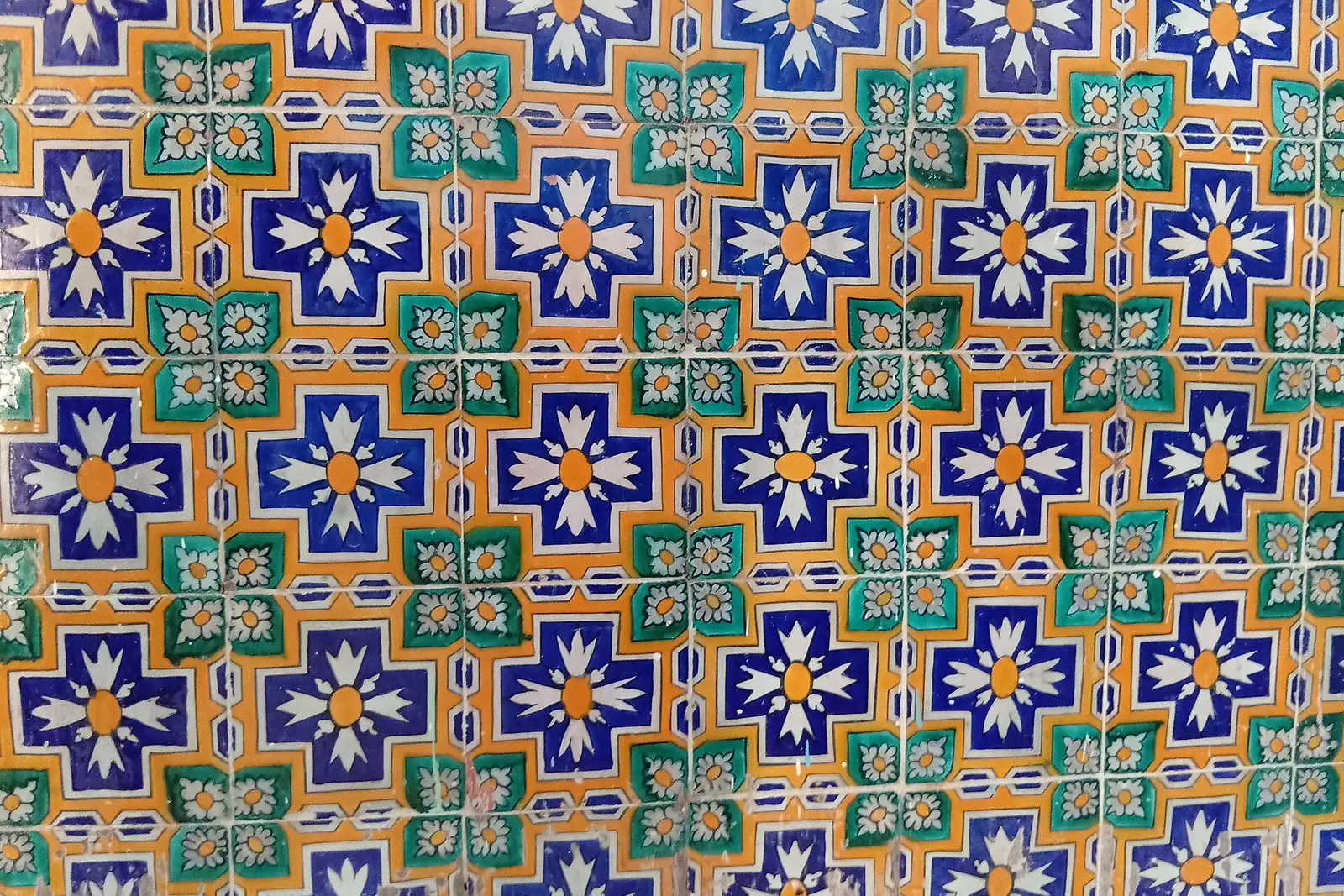
Close-up of glazed ceramic tiles with a repeating blue, green and yellow pattern
All machine vision applications
Machine Vision · Ceramics

Ceramic Tile Shade Sorting and Surface Defect Inspection

Tile grading sorts every tile by shade, size and surface quality before it is boxed. Machine vision measures colour in CIELAB to group tiles into shades, measures calibre and squareness, and finds cracks, chips, pinholes and glaze faults, so each box holds matching first-grade tiles.

Tile Shade & Defect Grading at a glance

What it grades
Shade (tone), calibre (size), squareness and flatness, and surface quality.
What it finds
Cracks, chips, pinholes, glaze drips and crawling, spots, print and decoration faults, edge and corner damage.
How it measures
Colour cameras under controlled light, values in CIELAB with ΔE tolerances, and calibrated dimensional measurement.
What you get
Tiles sorted into shade and calibre groups and quality grades, with a record per batch.
Definition

What is tile shade and defect grading?

Tile grading is the end-of-line process that decides which shade, calibre and quality grade each tile belongs to. Tiles from one production run vary slightly in colour and size, and customers expect every tile in a box, and every box in an order, to match.

Machine vision does this objectively. A colour camera under fixed, calibrated lighting measures each tile in CIELAB and groups tiles whose colour difference falls within a set ΔE tolerance into the same shade. Dimensional measurement assigns the calibre. Surface inspection finds defects and grades the tile.

The method follows the same principles as our shade segregation work for textiles: controlled light, colour measured as numbers instead of by eye, and shade bands set to the tolerance your customers accept. Surface quality and dimensional checks are defined for ceramic tiles in ISO 10545-2.

The problem

Why manual tile grading falls short

  • Graders judge shade by eye, and judgement varies between people and shifts.
  • Fatigue and changing ambient light cause shade mixing in boxes.
  • Small pinholes and fine cracks are easy to miss at line speed.
  • Mixed shades and calibres lead to complaints after tiles are laid.
  • There is no record of what was graded and why.
How it works

How tile shade and defect grading works, step by step

STEP 1TransportSTEP 2MeasureSTEP 3InspectSTEP 4GradeSTEP 5Sort
  1. STEP 1

    Tiles on the line

    Tiles pass on the grading line after the kiln, one at a time and flat, at production speed.

  2. STEP 2

    Measure colour and size

    A colour camera under controlled light measures shade in CIELAB; dimensional measurement checks calibre, squareness and edges.

  3. STEP 3

    Inspect the surface

    Lighting at several angles reveals cracks, chips, pinholes, glaze and decoration faults, and deep learning handles patterned surfaces.

  4. STEP 4

    Assign shade, calibre and grade

    Each tile is assigned a shade group, a calibre and a quality grade against your limits.

  5. STEP 5

    Sort and record

    The line diverts tiles to the right stacker or box, and each batch record keeps the shade and grade distribution.

The technology

Methods that make it reliable

CIELAB colour measurement

Colour is measured as L*, a* and b* under fixed illumination, so shade groups are defined by numbers rather than opinion. Differences are expressed as ΔE, using CIE76, CMC or CIEDE2000 as agreed.

Shade clustering

Tiles are grouped into shades by their colour difference from shade references, with tolerances tuned to what is visible on the laid floor or wall.

Dimensional measurement

Calibrated cameras measure length, width, squareness and edge straightness to assign the calibre and reject out-of-tolerance tiles.

Multi-angle surface lighting

Low-angle and diffuse lighting together reveal cracks, chips, pinholes, glaze drips and crawling on glossy and matt glazes.

Deep learning for decorated tiles

Printed and patterned tiles vary by design, so a model trained on good tiles separates real defects from the pattern.

Capabilities

What it can check

  • Shade group (tone)
  • Calibre
  • Squareness
  • Edge straightness
  • Cracks
  • Chips and corner damage
  • Pinholes
  • Glaze drips and crawling
  • Spots and inclusions
  • Print and decoration faults
  • Surface flatness indicators
Industries

Where it is used

Floor and wall tile manufacturersPorcelain and vitrified tile plantsSanitarywarePorcelain tablewareCeramic export packing
Sample projects

How a project is scoped

Two example project scopes showing how the station, the checks and the outputs are defined. Every plant is different, so the final configuration is confirmed after a feasibility study on your own parts.

Example scope · Wall tiles

End-of-line shade and defect grading for glazed wall tiles

The situation: A tile manufacturer grades wall tiles by eye after the kiln and receives complaints about mixed shades within one order.

Station
Colour and surface cameras in a light-sealed hood on the grading line
Measures
Shade in CIELAB, calibre, squareness and surface defects
Output
Shade, calibre and grade per tile, diverted to the matching stacker
Extra
Shade and grade distribution per batch for production control
Example scope · Porcelain

Surface defect inspection on polished porcelain

The situation: A porcelain tile plant needs to catch fine cracks and pinholes on polished surfaces that reflect light strongly.

Station
Dome and low-angle lighting with high-resolution cameras after polishing
Detects
Hairline cracks, pinholes, polishing marks and edge chips
Output
First grade, second grade or reject per tile
Extra
Defect maps to trace faults back to press, kiln or polishing line
What is in the system

Typical components

  • Colour line-scan or area cameras
  • Light-sealed inspection hood
  • Calibrated LED illumination
  • Colour reference targets
  • Dimensional measurement cameras
  • Industrial PC with GPU
  • Diverters and stacker control

Cameras and lenses, supplied locally

Industrial cameras, lenses, line-scan cameras and code readers are available through our machine vision catalog, quoted with delivery to Sri Lanka. We select the hardware for your application during the feasibility study.

Browse the hardware catalog
How we work

Proven on your parts before you commit

Every product, surface and line behaves differently under a camera, so every project starts with evidence from your own material.

  1. PHASE 1

    Discovery

    A site visit to understand your product, line speed, quality criteria and where the check should sit.

  2. PHASE 2

    Feasibility study

    We image your good and defective samples and show what the system can reliably detect. This is the go or no-go.

  3. PHASE 3

    Pilot station

    One station on one line, running beside your inspectors until results match and your team trusts them.

  4. PHASE 4

    Rollout and support

    More lines, integration with your PLC and systems, and local support from our Sri Lankan engineering team.

FAQ

Tile Shade & Defect Grading: common questions

How does machine vision sort tile shades?

+

It measures the colour of each tile in CIELAB under fixed, calibrated light and groups tiles whose colour difference is within a set ΔE tolerance. Because it measures rather than judges, the same tile always lands in the same shade group.

Can it handle patterned and decorated tiles?

+

Yes. For shade, colour is measured over the whole surface or chosen regions. For defects, deep learning trained on good tiles of each design separates real faults from the pattern.

What standards apply to tile surface quality?

+

ISO 10545-2 describes how ceramic tile dimensions and surface quality are determined, and ISO 13006 covers classification. Many manufacturers also use their own customer-specific shade and grade rules, which the system can follow.

Does it work on glossy and polished tiles?

+

Yes, but the lighting has to be designed for reflective surfaces. Dome lighting gives an even view for colour and spots, while low-angle light makes cracks and pinholes visible. See our page on glossy part inspection for the principles.

Is this the same technology as textile shade sorting?

+

The principles are the same: controlled light, CIELAB measurement and shade bands set by tolerance. We apply the method we use for fabric and garment shade segregation, adapted to tiles and kiln variation.

Send us a few sample parts

Tell us what you need to check and share some good and faulty samples. We will show you what a camera can reliably see before you commit to anything.

Photographs show representative plants and equipment, not Cerox installations or client sites. Diagrams by Cerox Engineering. Photo credits, via Wikimedia Commons: Ceramic tiles by Houss 2020, CC0.