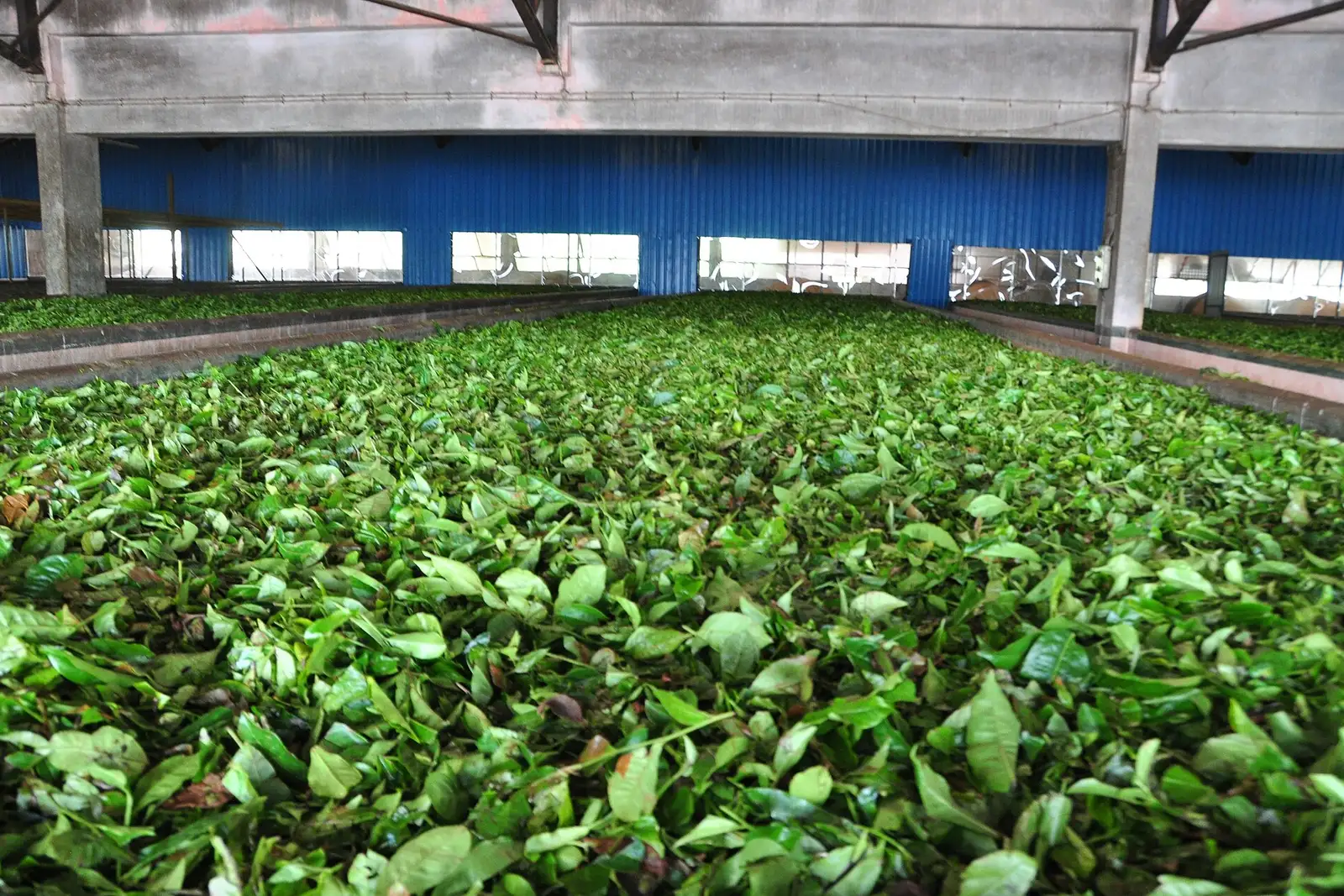
Freshly delivered green tea leaf spread in a withering trough inside a tea factory
All machine vision applications
Computer Vision · Tea · In development

Green Leaf Quality Assessment for Tea Factories

Green leaf quality decides the quality of made tea, yet at most factories it is still judged by hand sampling at intake. We are developing a computer vision instrument that estimates the share of fine leaf in a sample from images, on the device itself, to give tea factories and their suppliers a faster, consistent and recorded measure of leaf quality.

Tea Leaf Quality Assessment at a glance

What it estimates
The share of fine leaf, meaning a bud with one or two young leaves, against coarse leaf, older leaves and stalk, in a green leaf sample.
Where it fits
Green leaf intake at the factory, at collection centres, and in supplier quality programmes.
How it works
A camera images a spread leaf sample under controlled light; a compact neural network runs on the device, with no cloud connection needed.
Status
In development at Cerox. We are looking for tea factories to trial it, not selling a finished product.
Definition

What is green leaf quality assessment?

Green leaf quality assessment is the measurement of how much of the plucked leaf delivered to a tea factory is fine leaf, usually the bud with one or two young leaves, and how much is coarse leaf, old leaves, stalk or damaged leaf. Fine leaf makes better tea, so leaf quality affects both the factory’s made tea and how suppliers are paid or advised.

Today leaf quality is usually checked by taking a sample and sorting it by hand. That is slow, so only a few samples are checked, and different people sort differently, which leads to disputes with suppliers. A camera-based method can assess a sample in seconds, the same way every time, and keep the image as a record.

Cerox is developing this as an instrument that runs a quantised neural network on the device, so it works at a factory or collection centre without relying on internet access. It is development work: we describe here what it is designed to do, and we are looking for tea factories willing to trial it on real intake.

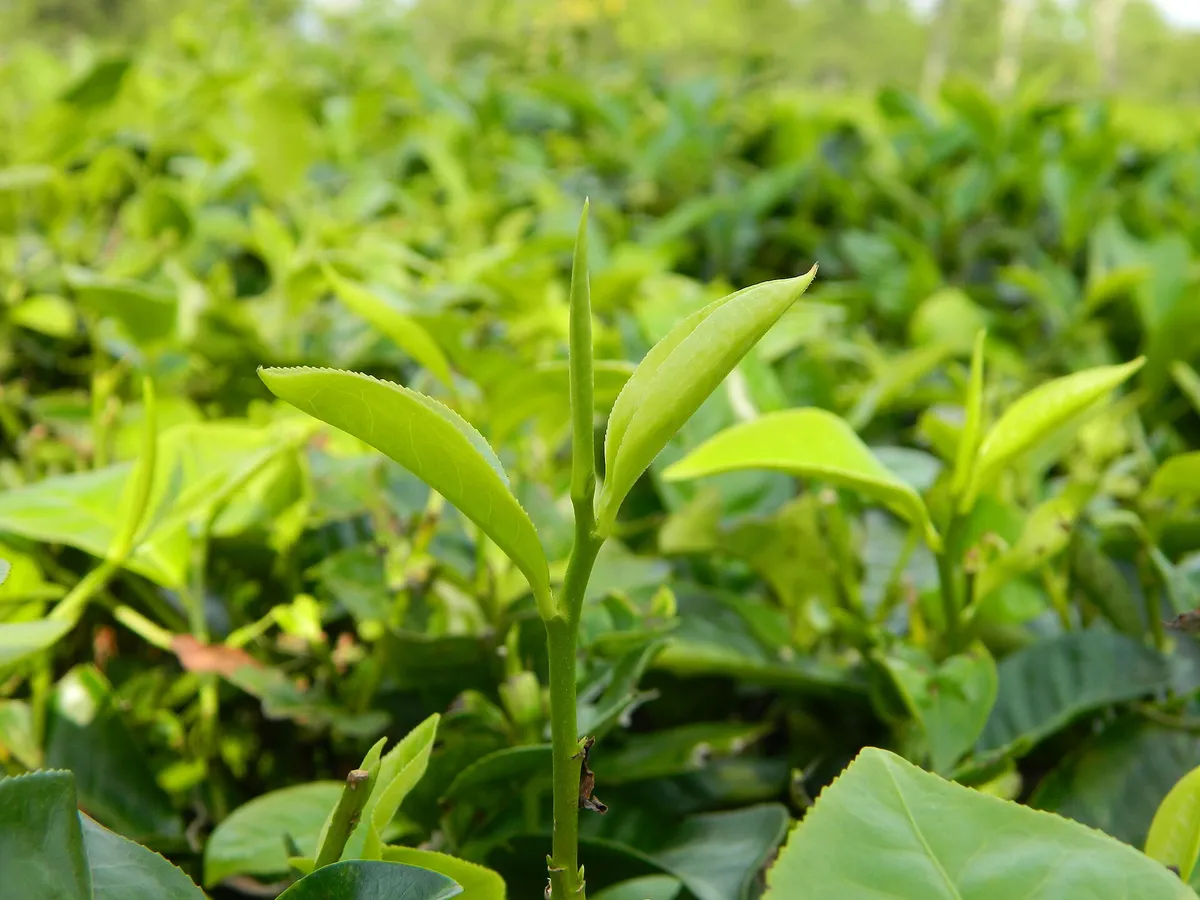
A tea shoot with a bud and two young leaves standing above the bush
Two leaves and a bud, the classic definition of fine leaf. Telling it apart from coarse leaf is what the instrument is trained to do.
The problem

Why leaf quality is hard to manage today

  • Manual sorting of leaf samples is slow, so only a small share of deliveries is checked.
  • Results vary between the people sorting, which causes disputes with suppliers.
  • Peak intake leaves little time to check quality before leaf goes to withering.
  • Without records, it is hard to give suppliers clear feedback on plucking standards.
  • Leaf quality problems show up later as lower made tea quality and prices.
How it works

How green leaf quality assessment works, step by step

STEP 1SampleSTEP 2ImageSTEP 3ClassifySTEP 4EstimateSTEP 5Record
  1. STEP 1

    Take a leaf sample

    A sample is taken from the delivery, as it is today, and spread on the instrument’s tray.

  2. STEP 2

    Image under fixed light

    The instrument photographs the sample under controlled lighting so results do not depend on daylight or shade.

  3. STEP 3

    Classify on the device

    A compact neural network running on the device identifies fine leaf, coarse leaf and stalk in the image.

  4. STEP 4

    Estimate leaf quality

    The share of fine leaf in the sample is calculated and shown in seconds.

  5. STEP 5

    Record against the supplier

    The result and image are saved against the supplier, route and delivery for feedback and records.

The technology

Methods that make it reliable

Controlled imaging

A closed or shaded imaging area with fixed lighting removes the effect of weather and time of day, which matters for green leaf colour and shape.

Leaf classification by neural network

A convolutional neural network is trained to recognise fine leaf, coarse leaf and stalk from labelled samples graded by experienced leaf officers.

On-device inference

The network is quantised so it runs on a small computer inside the instrument, without a cloud connection, suited to factories and collection centres with weak internet.

Calibration against manual grading

Results are compared with manual sorting of the same samples, which is how a factory can judge whether the instrument agrees with its own leaf standard.

Capabilities

What it can check

  • Fine leaf share
  • Coarse and old leaf
  • Stalk and woody material
  • Damaged or bruised leaf
  • Sample image record
  • Supplier and route logging
Industries

Where it is used

Tea factoriesRegional plantation companiesSmallholder collection centresTea research and extensionBought leaf factories
Sample projects

How a project is scoped

Two example project scopes showing how the station, the checks and the outputs are defined. Every plant is different, so the final configuration is confirmed after a feasibility study on your own parts.

Example scope · Pilot

Trial at a bought leaf factory intake

The situation: A factory buying leaf from smallholders wants consistent leaf quality checks at intake without slowing down evening deliveries.

Station
Leaf assessment instrument at the intake point beside the weighbridge
Measures
Fine leaf share per sample, alongside the factory’s own manual sorting during the trial
Output
Result and image per delivery, comparison with manual results
Extra
Supplier feedback reports once results agree with the factory standard
Example scope · Collection centre

Leaf quality check at a collection centre

The situation: A plantation company wants leaf quality measured where smallholders hand over leaf, before it is loaded for the factory.

Station
Portable instrument running without internet
Measures
Fine leaf share per supplier sample
Output
Result shown to the supplier at handover, stored for upload later
Extra
Combined with intake weights for a full delivery record
What is in the system

Typical components

  • Leaf sample tray and imaging enclosure
  • Controlled LED lighting
  • Colour camera
  • Embedded computer for on-device inference
  • Display and result printer
  • Data export to factory systems

Cameras and lenses, supplied locally

Industrial cameras, lenses, line-scan cameras and code readers are available through our machine vision catalog, quoted with delivery to Sri Lanka. We select the hardware for your application during the feasibility study.

Browse the hardware catalog
How we work

Proven on your parts before you commit

Every product, surface and line behaves differently under a camera, so every project starts with evidence from your own material.

  1. PHASE 1

    Discovery

    A site visit to understand your product, line speed, quality criteria and where the check should sit.

  2. PHASE 2

    Feasibility study

    We image your good and defective samples and show what the system can reliably detect. This is the go or no-go.

  3. PHASE 3

    Pilot station

    One station on one line, running beside your inspectors until results match and your team trusts them.

  4. PHASE 4

    Rollout and support

    More lines, integration with your PLC and systems, and local support from our Sri Lankan engineering team.

FAQ

Tea Leaf Quality Assessment: common questions

Is this available to buy now?

+

Not as a finished product. It is in development at Cerox. We are looking for tea factories to trial it on real intake, so that results can be checked against the factory’s own manual leaf grading before anyone relies on them.

What counts as fine leaf?

+

Fine leaf is usually defined as the bud with one or two young leaves, sometimes including soft single leaves, while coarse leaf includes older leaves, hard stalk and damaged leaf. Factories apply their own leaf standards, so the instrument is calibrated to the definition the factory uses.

Does it need the internet?

+

No. The neural network runs on the device, so assessment works at factories and collection centres with weak or no connectivity. Results can be uploaded later.

Will it replace manual leaf sorting?

+

During a trial it runs alongside manual sorting so results can be compared. Whether it can replace manual checks depends on how closely it agrees with the factory’s graders, which the trial is designed to show.

Can it work with the weighbridge?

+

Yes, that is the intended setup: weight from the weighbridge and leaf quality from the instrument, recorded together per delivery. See our automated weighbridge page.

Send us a few sample parts

Tell us what you need to check and share some good and faulty samples. We will show you what a camera can reliably see before you commit to anything.

Photographs show representative plants and equipment, not Cerox installations or client sites. Diagrams by Cerox Engineering. Photo credits, via Wikimedia Commons: Green tea leaf in a withering trough by shankar s., CC BY 2.0; Tea, two leaves and a bud by Nborkakoty, CC BY-SA 3.0.