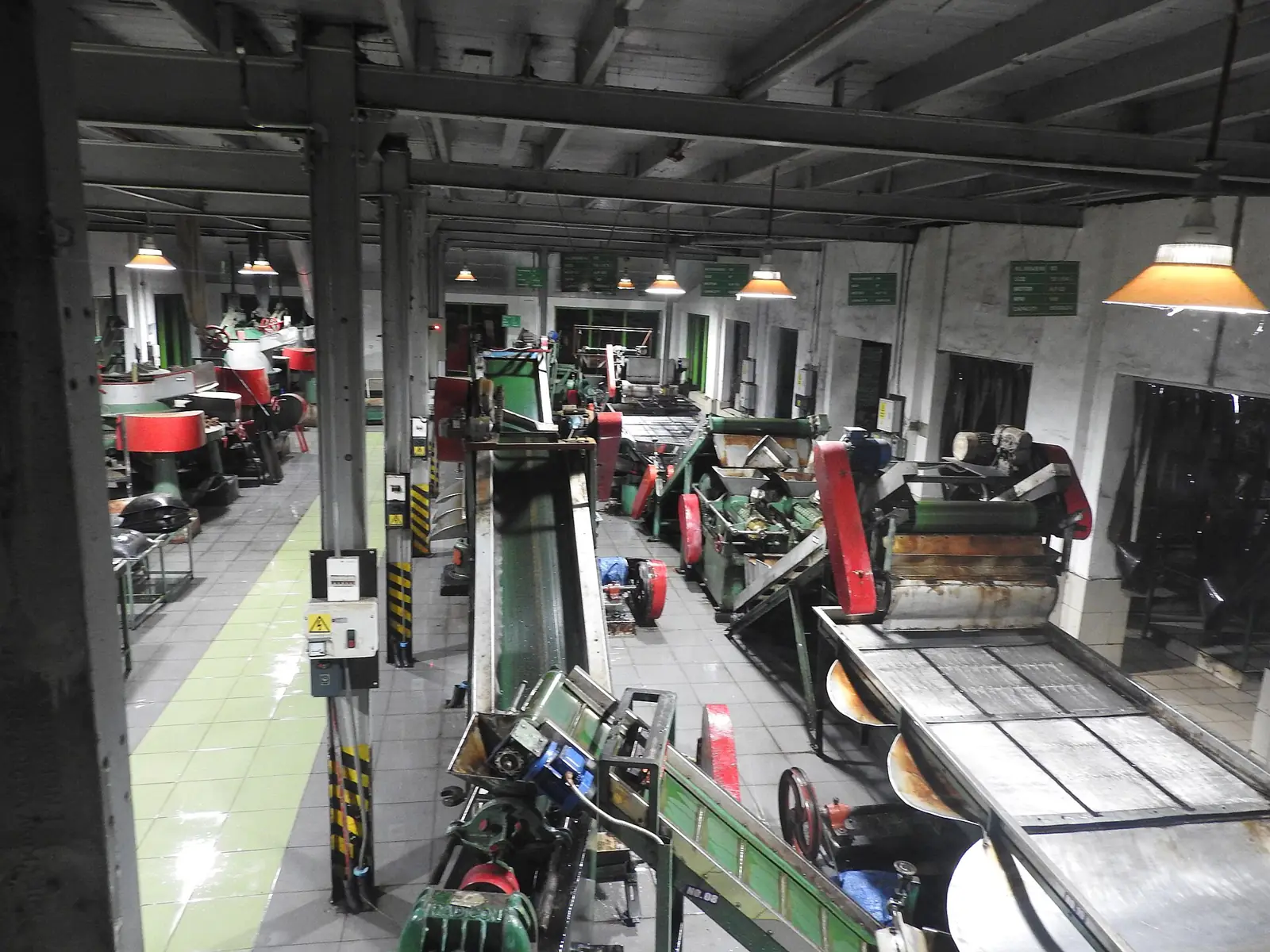
Processing machinery inside a tea factory in Nuwara Eliya, Sri Lanka
All machine vision applications
Machine Vision · Food & Agriculture

Food and Agricultural Product Grading with Machine Vision

Machine vision grading uses colour, near-infrared and hyperspectral cameras to inspect food and agricultural products at high speed, removing stalks, stones, foreign matter and defective pieces with air jets, and grading the rest by colour and size. It brings consistent quality to products that vary by nature.

Food & Agricultural Grading at a glance

What it sorts
Tea, spices, coconut products, nuts, grains, seeds, dried fruit and fresh produce.
What it removes
Stalks and fibre, stones, plastic, glass, insect damage, mould, discoloured and off-size pieces.
How it sees
Colour cameras for visible defects, NIR and hyperspectral imaging for foreign material that looks like the product.
What you get
Cleaner, consistent grades, higher value product, and less manual picking.
Definition

What is machine vision food grading?

Food and agricultural grading separates product by quality: removing what should not be there, and sorting the rest into grades by colour, size and appearance. By hand it is slow and inconsistent, and pickers cannot keep up with modern processing lines.

Optical sorters image a fast-moving stream of product and fire short bursts of compressed air to eject each rejected piece. For inspection of whole items such as fruit, cameras grade each piece on a conveyor and direct it to the right lane.

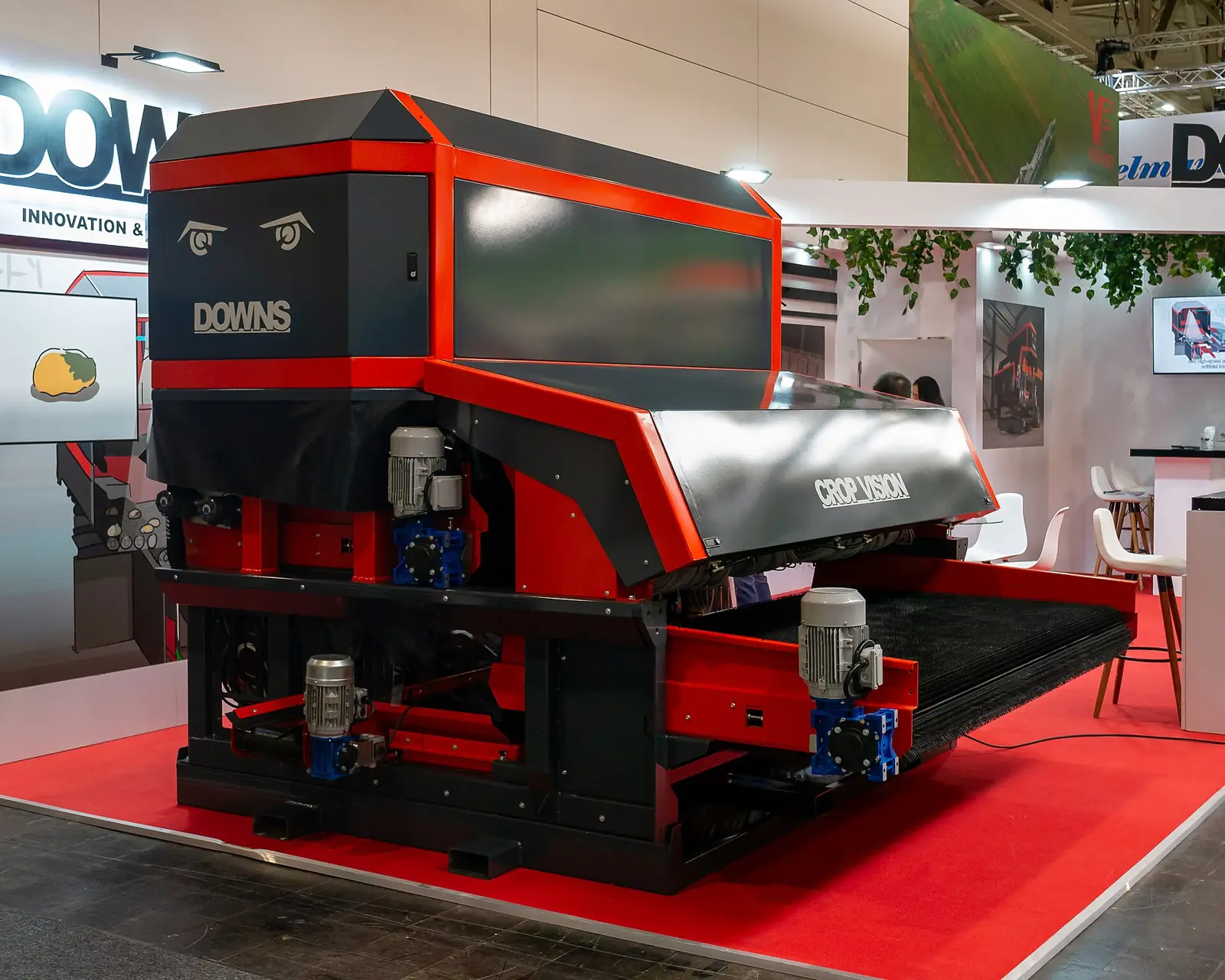
Optical sorting machine for agricultural produce at a trade exhibition
An optical sorter for produce. The same principle, cameras plus fast ejectors, is used for tea, spices, grains and nuts.
The problem

Why natural products need machine grading

  • Natural products vary piece by piece, so consistent grading is hard by eye.
  • Foreign matter such as stones, plastic and stalks damages reputation and export contracts.
  • Manual picking is slow, costly and hard to staff.
  • Buyers pay premiums for consistent colour and size grades.
  • Food safety standards require evidence of foreign body control.
How it works

How food & agricultural grading works, step by step

STEP 1FeedSTEP 2ImageSTEP 3DecideSTEP 4EjectSTEP 5Report
  1. STEP 1

    Spread the product

    A vibratory feeder or belt spreads the product into a thin, even stream so every piece can be seen.

  2. STEP 2

    Inspect each piece

    Colour, NIR or hyperspectral cameras image every piece in flight or on the belt, often from both sides.

  3. STEP 3

    Grade against the recipe

    Software compares colour, shape, size and spectral signature with the accept recipe for this product and grade.

  4. STEP 4

    Eject rejects

    Fast air-jet valves blow rejected pieces out of the stream; whole items are diverted into grade lanes.

  5. STEP 5

    Track yield

    Throughput, reject rates and grade yields are logged for each batch.

The technology

Methods that make it reliable

Colour sorting

Colour cameras remove discoloured, burnt, mouldy or immature pieces and grade by colour, as used widely for tea, rice, spices and nuts.

NIR and hyperspectral imaging

Near-infrared and hyperspectral cameras see chemical differences, so they can detect plastic, wood, stones or shell that look the same colour as the product.

Shape and size grading

Measures length, width and shape of each piece to remove broken pieces or to grade by size.

Hygienic design

Stainless steel, washdown-rated enclosures (for example IP65 or IP69K) and easy-clean surfaces suit food processing environments.

Capabilities

What it can check

  • Tea stalks and fibre
  • Stones and foreign matter
  • Plastic, glass and wood
  • Discoloured and burnt pieces
  • Mould and insect damage
  • Broken and off-size pieces
  • Shell in nuts and kernels
  • Colour grades
  • Size grades
Industries

Where it is used

TeaSpicesCoconut productsNuts and cashewRice and grainsFruit and vegetables
Sample projects

How a project is scoped

Two example project scopes showing how the station, the checks and the outputs are defined. Every plant is different, so the final configuration is confirmed after a feasibility study on your own parts.

Example scope · Tea

Stalk and fibre removal on a tea line

The situation: A tea factory removes stalk and fibre by hand after rolling and grading, and struggles to staff the line.

Station
Colour sorter after the grading sieves
Detects
Stalk, fibre and discoloured particles by colour and shape
Output
Cleaner grades, rejects collected for reprocessing
Extra
Reject rate per batch as a check on upstream processing
Example scope · Spices

Foreign matter removal before packing

The situation: A spice exporter needs stronger foreign body control to meet a new buyer’s audit.

Station
NIR or hyperspectral sorter before the packing hopper
Detects
Stones, plastic, wood and shell, plus discoloured product
Output
Clean product to packing, rejects logged per batch
Extra
Foreign body control record for buyer audits
What is in the system

Typical components

  • Colour line-scan cameras
  • NIR or hyperspectral cameras
  • High-intensity LED lighting
  • Vibratory feeders or belts
  • High-speed air-jet ejector manifold
  • Hygienic stainless enclosure

Cameras and lenses, supplied locally

Industrial cameras, lenses, line-scan cameras and code readers are available through our machine vision catalog, quoted with delivery to Sri Lanka. We select the hardware for your application during the feasibility study.

Browse the hardware catalog
How we work

Proven on your parts before you commit

Every product, surface and line behaves differently under a camera, so every project starts with evidence from your own material.

  1. PHASE 1

    Discovery

    A site visit to understand your product, line speed, quality criteria and where the check should sit.

  2. PHASE 2

    Feasibility study

    We image your good and defective samples and show what the system can reliably detect. This is the go or no-go.

  3. PHASE 3

    Pilot station

    One station on one line, running beside your inspectors until results match and your team trusts them.

  4. PHASE 4

    Rollout and support

    More lines, integration with your PLC and systems, and local support from our Sri Lankan engineering team.

FAQ

Food & Agricultural Grading: common questions

Can machine vision sort tea?

+

Yes. Colour sorters are widely used in tea processing to remove stalk, fibre and discoloured particles, and to make grades more consistent. The sorter is set up for each grade and tea type.

How does a sorter detect plastic that is the same colour as the product?

+

With near-infrared or hyperspectral imaging. These cameras see differences in chemical composition that are invisible in colour images, so plastic, wood and stones can be separated from the product.

What is the difference between an optical sorter and a grader?

+

An optical sorter inspects a stream of small pieces and ejects rejects with air jets. A grader inspects larger individual items, such as fruit, on a conveyor and sends each one to a lane for its grade. Both use cameras and the same software ideas.

Is the equipment suitable for food hygiene standards?

+

Food-grade sorters are built from stainless steel with washdown-rated enclosures and easy-clean surfaces. The right rating depends on how the area is cleaned.

Can it grade fresh produce by size and colour?

+

Yes. Cameras on a conveyor measure the colour, size and surface defects of each fruit or vegetable and direct it to the lane for its grade.

Send us a few sample parts

Tell us what you need to check and share some good and faulty samples. We will show you what a camera can reliably see before you commit to anything.

Photographs show representative plants and equipment, not Cerox installations or client sites. Diagrams by Cerox Engineering. Photo credits, via Wikimedia Commons: Tea factory, Nuwara Eliya by Yercaud-elango, CC BY-SA 4.0; Tea processing conveyors by Bdx, CC BY-SA 4.0; Optical sorting machine by MB-one, CC BY-SA 4.0.