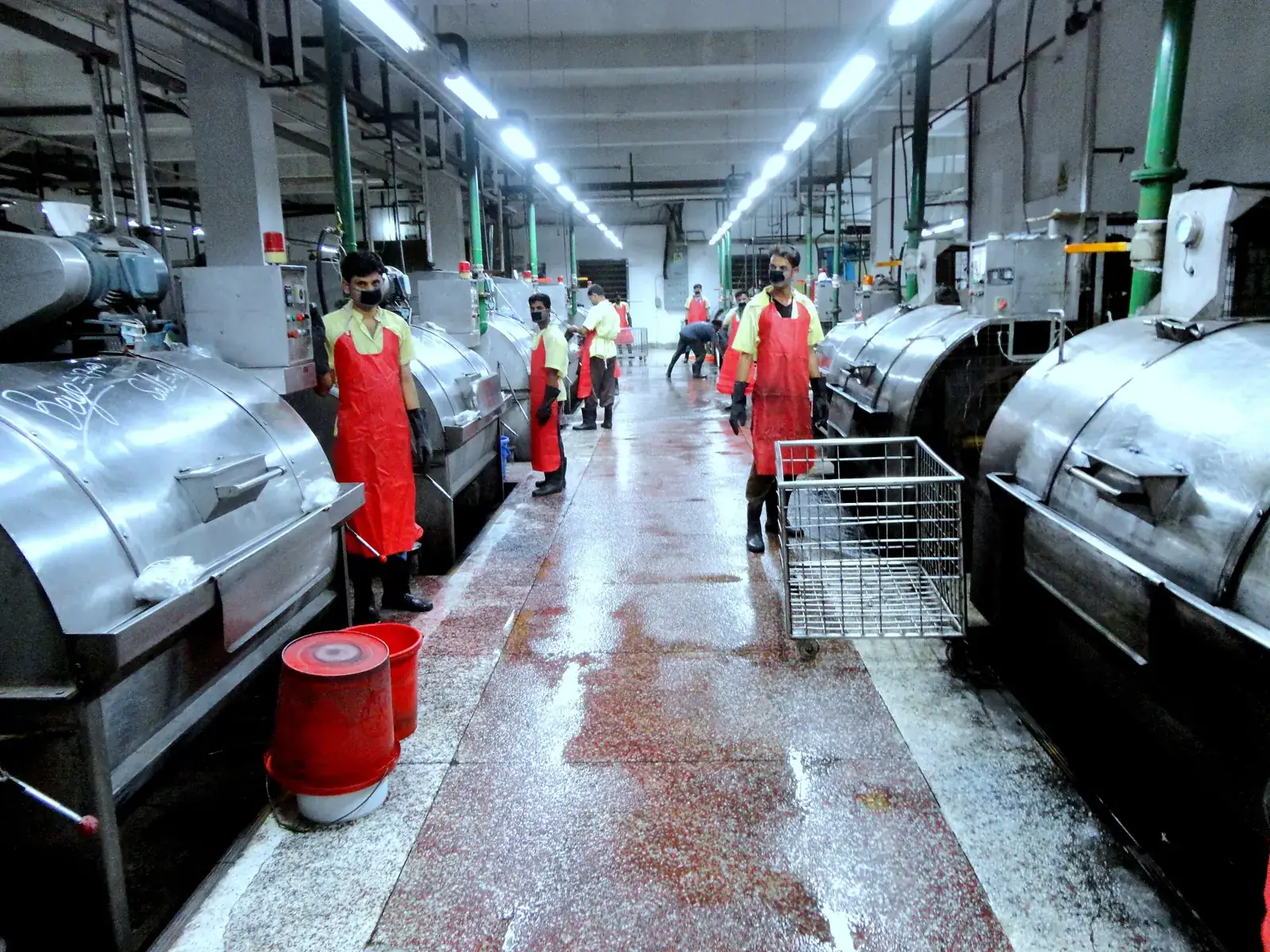
Row of industrial washing machines in a denim garment washing plant
Back to Factory Automation
Industrial Automation · Machine Vision

Shade Segregation Systems for Fabric and Garments

Automated shade sorting that measures every roll, panel or garment under controlled light, assigns it to your buyer's shade band, and keeps a record of every piece. For washing plants, fabric inspection, cutting rooms and packing. Engineered, installed and supported in Sri Lanka by Cerox.

Shade segregation at a glance

What it does
Groups rolls, panels or garments by exact colour, so pieces that ship together match.
How it measures
Calibrated camera or multispectral sensor in a D65 / TL84 light cabinet, converted to CIELAB.
How it decides
CMC 2:1 (ISO 105-J03) or CIEDE2000 against your approved standard, as bands or 555 codes.
What you get
Sorted lanes or shade labels, and a lot and PO report for QA and your buyer.
What is shade segregation?

Same style, same lot, different shade

Shade segregation is the process of grouping fabric, cut panels or finished garments by their exact colour, so that everything which ends up together, in one garment, one carton or one shipment, matches.

Shade varies for real, physical reasons: dye lots differ, a roll can change colour from side to centre (listing) and from head to tail (ending), and washing processes such as enzyme, stone, bleach and ozone amplify small differences. Denim is the most visible case, because indigo is especially prone to variation, but knits, wovens and garment-dyed products all need it.

Buyers accept a shipment only if every carton is one consistent shade. So plants sort, and today most of that sorting is done by eye.

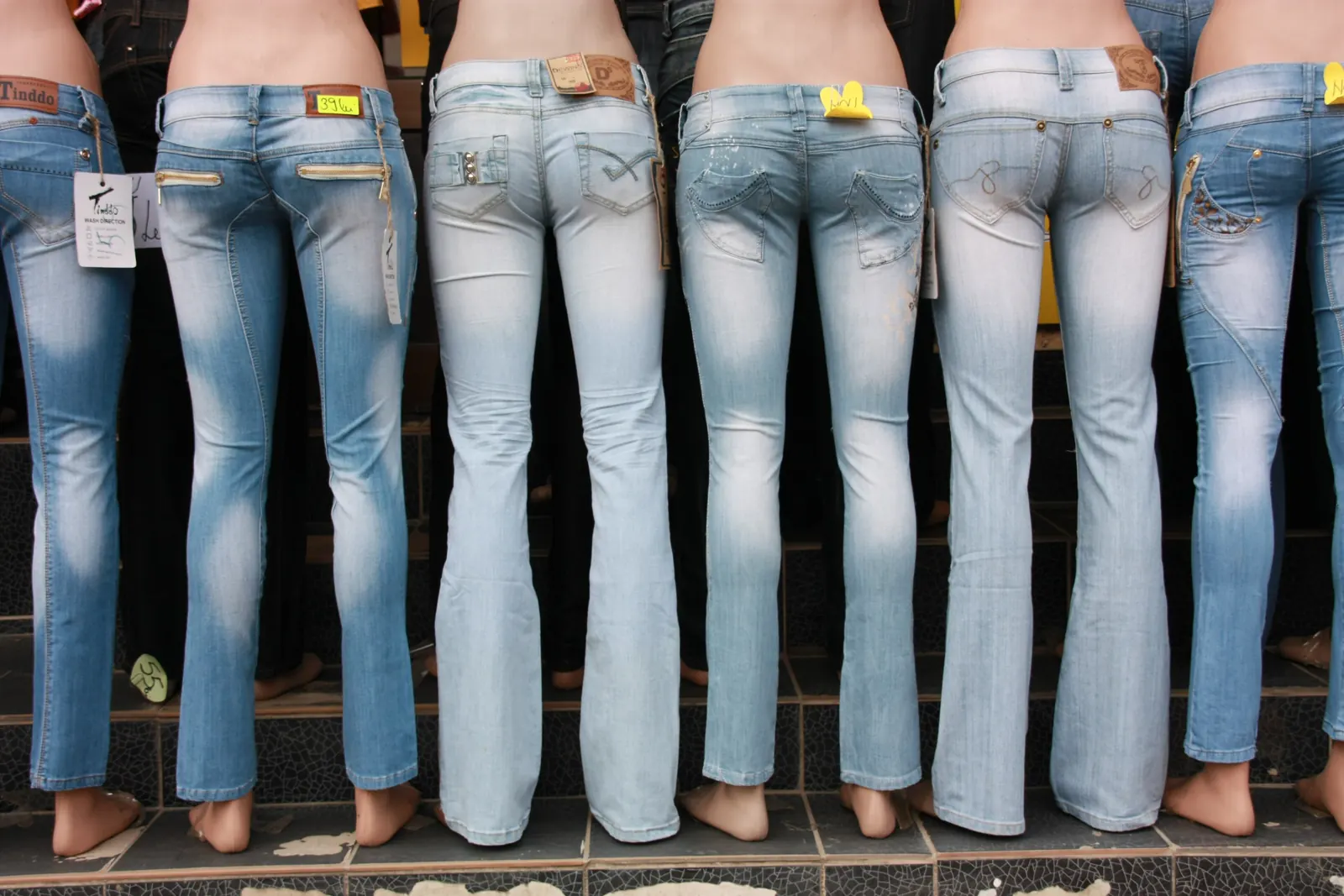
A row of jeans on display mannequins, each a visibly different shade of blue
The problem in one picture: similar jeans, visibly different shades. Side by side on a shelf or in one carton, the difference is obvious to a buyer.
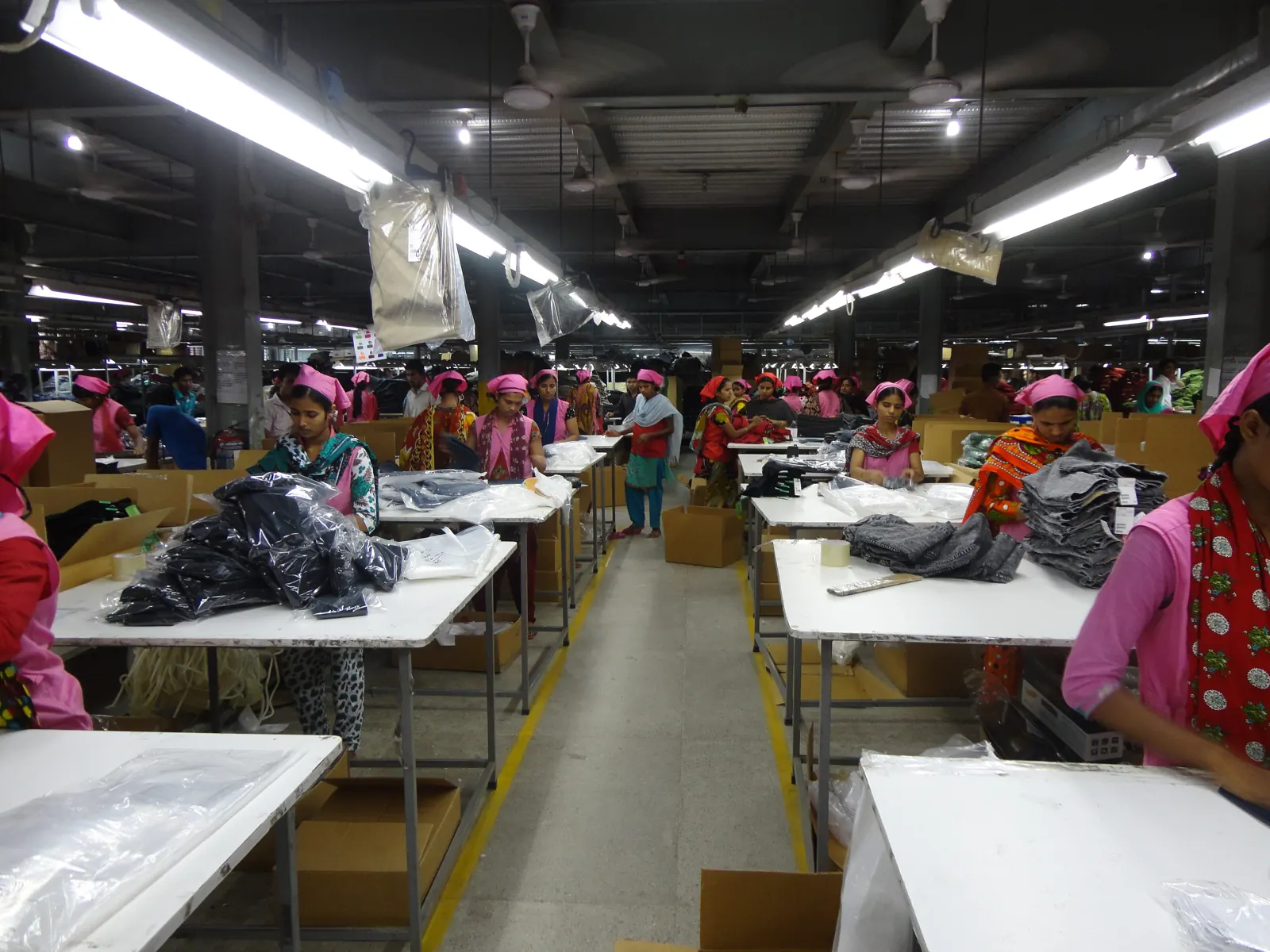
Workers checking washed denim jeans by hand on long inspection tables
Manual checking in a denim finishing plant. Skilled work, but slow and subjective.
How it is done today

Sorting by eye does not scale

  • Inspectors compare pieces with a shade standard in a light box and sort them into piles.
  • Two inspectors, or two shifts, rarely agree exactly on borderline pieces.
  • Eyes tire over a long shift, and judgement drifts with them.
  • There is no measured record, so a buyer shade claim is hard to answer.
  • Your most experienced shade approvers spend the day on routine pieces instead of exceptions.
How automated shade segregation works

Measure every piece the same way, every time

A shade segregation station replaces the judgement call with a measurement. It does not replace your shade approvers: it learns their standard, applies it to every piece, and hands them only the exceptions.

Automated shade segregation stationGarments travel on an overhead line into a light-controlled measurement cabinet with a calibrated camera. A diverter then sends each one to shade band A, B or C, or to an out of tolerance lane, while every result goes to a lot report.OVERHEAD LINEMixed shades from one lotMeasurement cabinetD65 + TL84 / A, calibrated cameraL* 31.8 a* -0.6b* -17.9ΔE 0.62 → Band ADiverterBand ABand BBand COut of toleranceEvery piece logged: lot · style · PO · L*a*b* · ΔE · band · time → lot report, ERP export, drift alerts
  1. STEP 1

    Present

    Pieces arrive on your existing overhead line, belt, or fabric inspection frame. Nothing about upstream production changes.

  2. STEP 2

    Control the light

    An enclosed cabinet blocks ambient light and illuminates each piece with standard illuminants, typically D65 daylight plus TL84 or A to reveal metamerism.

  3. STEP 3

    Measure

    A calibrated colour camera or multispectral sensor measures defined zones, avoiding seams, labels, whiskers and pockets, and converts them to CIELAB values.

  4. STEP 4

    Compare

    Software computes the colour difference to the approved standard using CMC 2:1 or CIEDE2000, then assigns a shade band or 555 code against your buyer tolerance.

  5. STEP 5

    Segregate

    A diverter or pick lane sends each piece to its band, or a printed label or RFID tag carries the shade code. Out of tolerance pieces go to a separate lane.

  6. STEP 6

    Record

    Every measurement is logged against lot, style and PO. Lot reports go to QA and the buyer, and drift alerts go back to dyeing or washing.

The colour science

Shade bands and 555 codes, explained

Colour is measured in CIELAB: L* for lightness, a* for red/green and b* for yellow/blue. The difference from the approved standard is expressed as a single number, ΔE. Textile acceptability is usually judged with the CMC (l:c) formula at 2:1, defined in ISO 105-J03, with CIEDE2000 as an alternative. Your buyer's standard decides the tolerances.

Shade bands around an approved standardConcentric tolerance rings around the approved shade standard. Pieces closest to the standard fall in band A, further out in bands B and C, and pieces in the outer pink ring are out of tolerance.ApprovedstandardBand ABand BBand COut of toleranceEach dot is one garment, placed by its colour difference from the standard

Shade banding

Pieces are grouped into bands by their distance from the approved standard. The number of bands and their width are set per buyer or per style. Anything beyond the outer tolerance is held for your team to decide: re-wash, re-grade or reject.

Example 555 shade code: 465Three scales from 1 to 9 for lightness, red/green and yellow/blue, where 5 is on standard. The example piece reads 4, 6, 5: one step off in lightness, one step off in red/green, and on standard in yellow/blue.LightnessL*987654321one step darkerRed / greena*987654321one step redderYellow / blueb*987654321on standardShade code 465

The 555 shade sorting system

Each piece gets a three digit code: one digit each for lightness, red/green and yellow/blue. A 5 means on standard, and each step is a fixed tolerance interval. Pieces with the same code combine safely, which makes lay planning and carton filling simple. Step size and direction follow your buyer's convention.

What makes the measurement trustworthy

  • Enclosed cabinet, so ambient light and daylight changes never reach the sensor
  • Calibration against reference tiles at every shift start, with a logged check
  • Multiple illuminants to catch metamerism, where two shades match in one light only
  • Measurement zones that skip seams, labels, whiskers, pockets and prints
  • Pieces measured dry and cooled, because damp fabric reads darker
  • Correlation with your lab spectrophotometer and your senior approver during the pilot
Where it fits

Four points in the process where shade gets decided

The earlier shade is controlled, the cheaper a mistake is. Most plants start at the point that hurts most today and add the others later on the same software.

01

Fabric rolls

Measure each roll at the start, middle and end and across the width to catch listing (side to centre) and ending (head to tail) variation. Group rolls by shade before cutting.

02

Cut panels and bundles

Confirm that the panels assembled into one garment come from the same shade group, so a front never mismatches its back or sleeves.

03

Washed garments

After enzyme, stone, bleach or ozone washing, sort denim and garment-dyed pieces into shade bands before folding and packing.

04

Finished goods

Check shade at packing so every carton and every PO ships as one consistent shade, with the band printed on the carton label.

Sample projects

How a shade segregation project is scoped

Four example project scopes, one for each point in the process. They show how the station, the measurement and the outputs are defined for a typical plant. Every plant is different, so the final configuration is confirmed after a feasibility study on your own material.

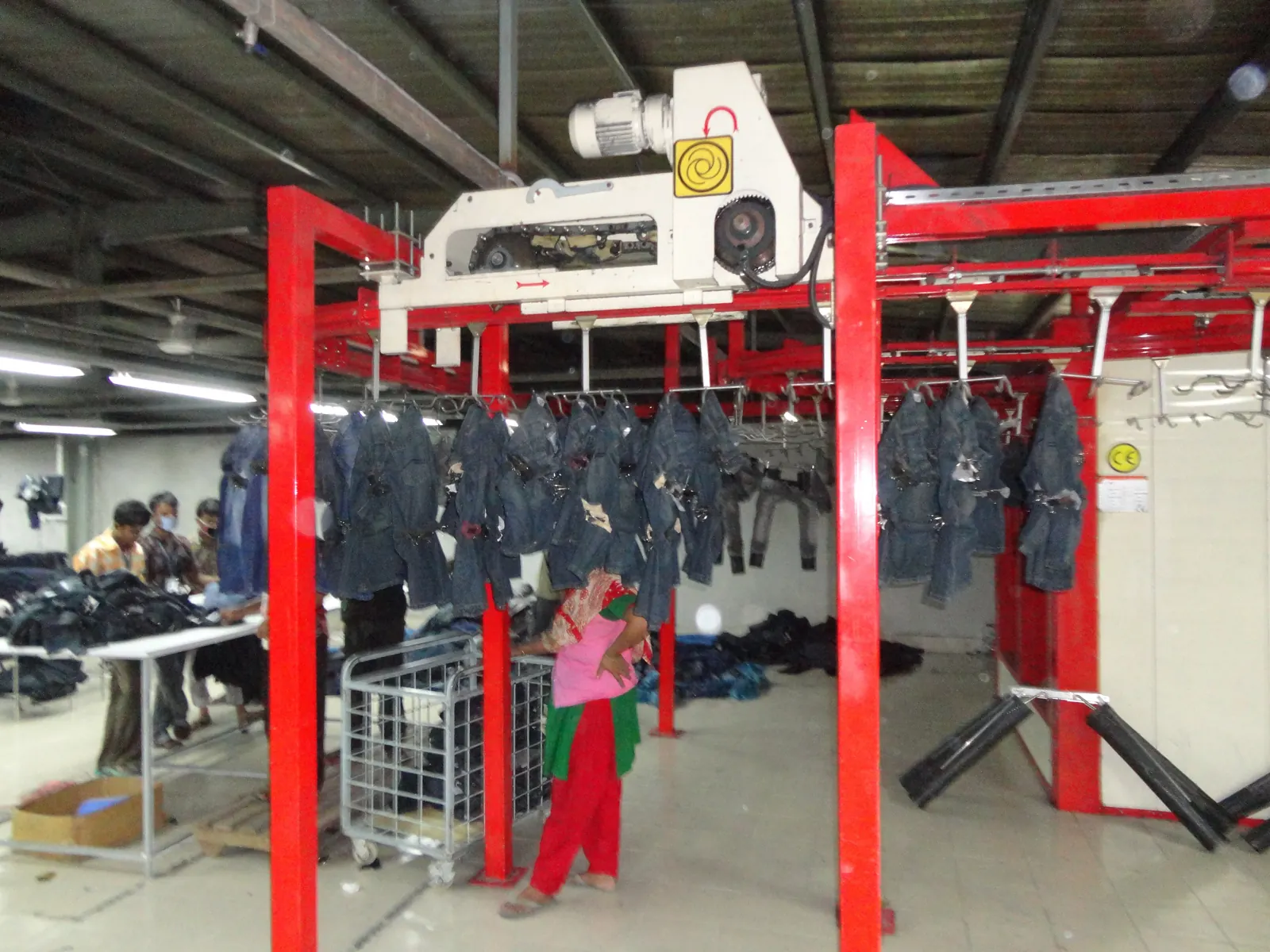
Washed denim jeans hanging on an overhead garment conveyor in a finishing plant
Example scope · Denim washing plant

Post-wash garment shade banding on an overhead line

The situation: A laundry washing jeans for export buyers sorts every garment into shade bands by eye, and bands disagree between shifts.

Station
Measurement cabinet on the overhead line after drying and cooling
Measures
Front and back thigh zones, averaged, under D65 and TL84
Output
Buyer bands plus an out of tolerance lane, lot report per wash batch
Extra
Shade drift alert back to the wash floor when a recipe starts to wander
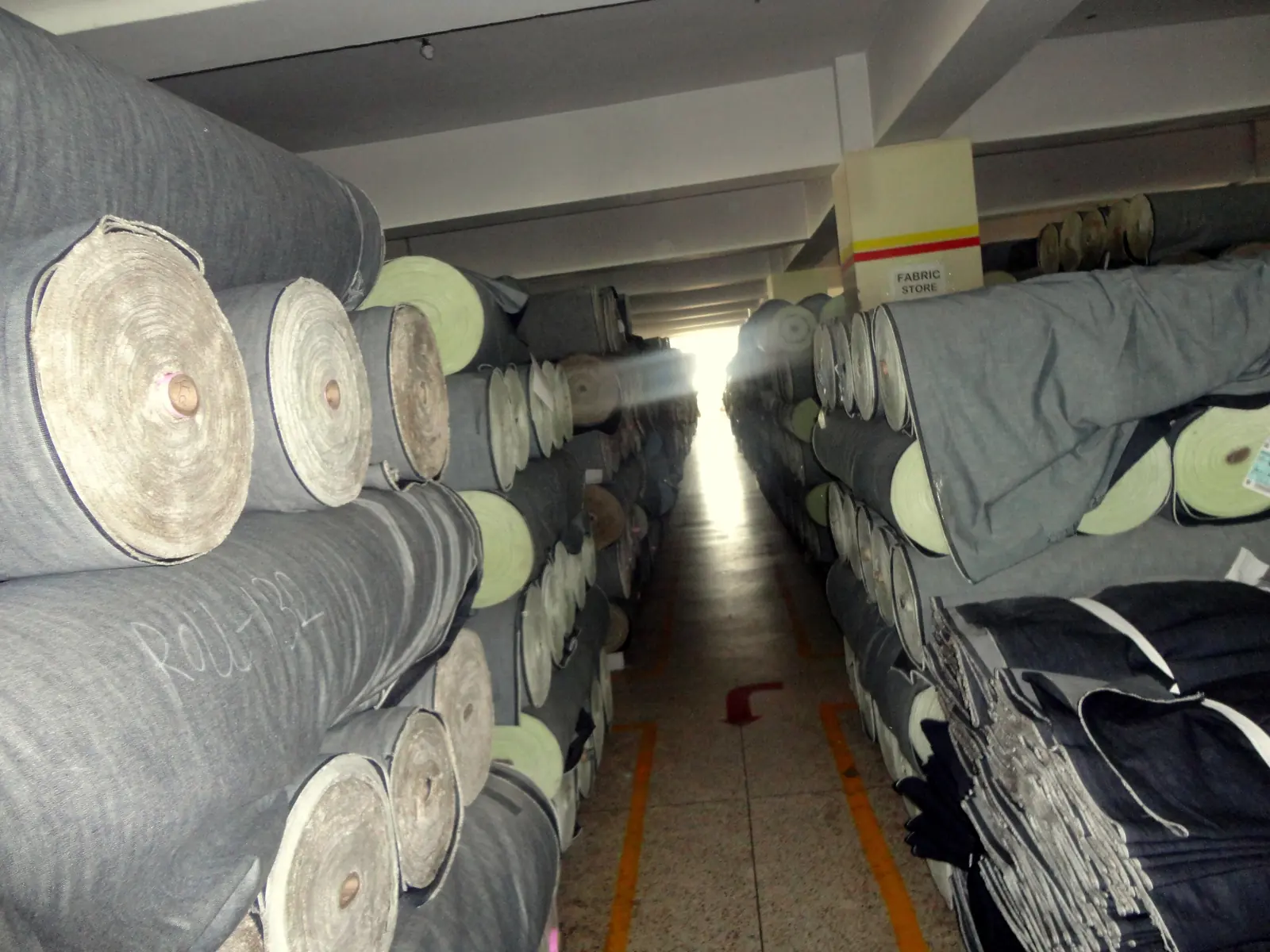
Rolls of denim fabric stored on racks in a garment factory fabric store
Example scope · Fabric inspection

Roll shade grouping with 555 codes before cutting

The situation: A woven or knit plant receives rolls from several dye lots and discovers shade mismatch only after sewing.

Station
Measurement heads added to the fabric inspection frame
Measures
Start, middle and end of each roll, and side, centre, side across the width
Output
555 code printed on the roll ticket, rolls grouped for lay planning
Extra
Listing and ending flagged before the roll ever reaches the cutting table
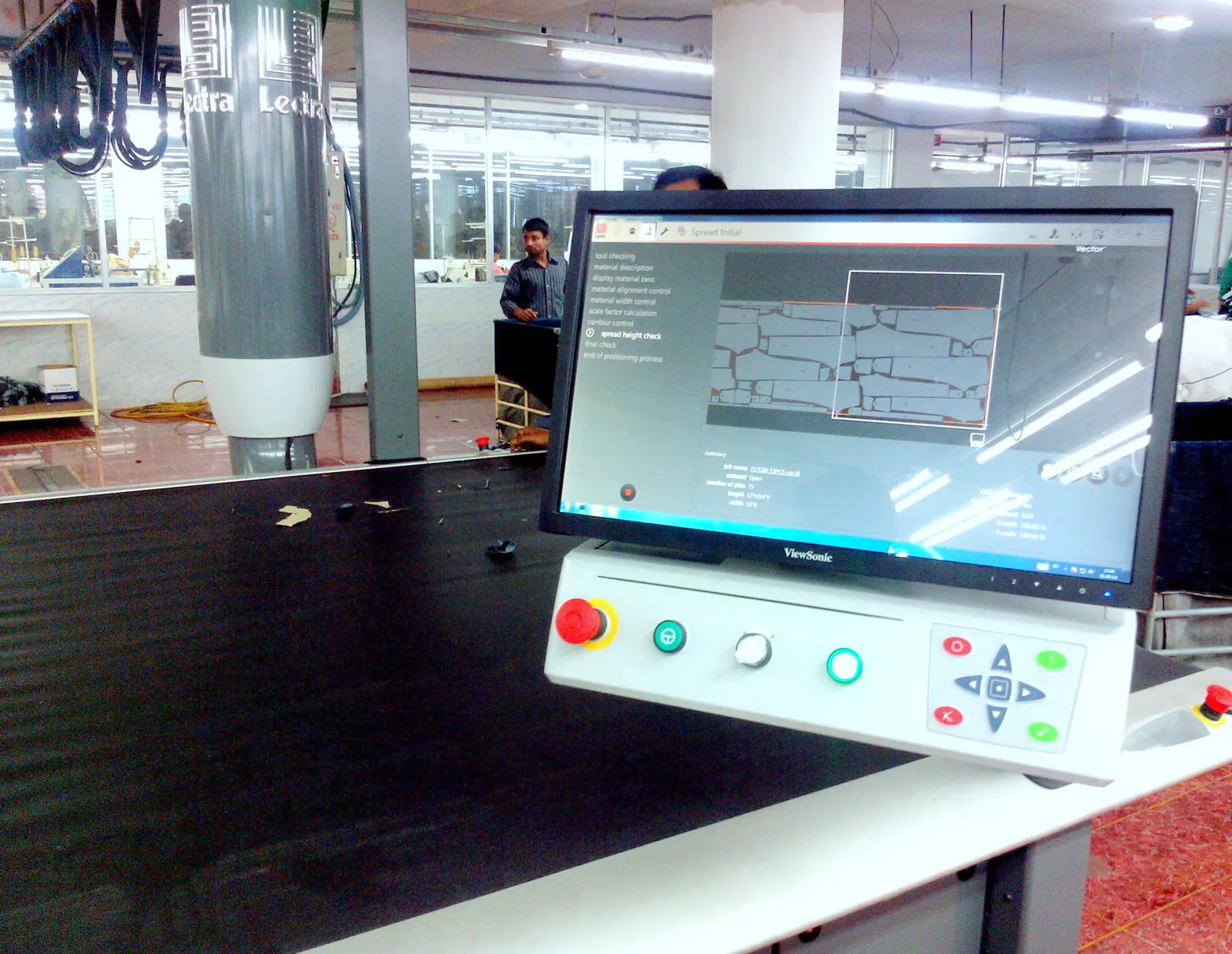
Automatic fabric cutting machine with its control screen in a denim cutting room
Example scope · Cutting room

Panel shade matching per bundle

The situation: Garments occasionally reach QC with a front panel a shade apart from its back, and the whole bundle has to be recut.

Station
Bench-top measurement cabinet at bundle ticketing
Measures
A sample panel from each ply group against the lay shade group
Output
Shade group on the bundle ticket, mismatched bundles held for review
Extra
Ticket data links each finished garment back to its roll
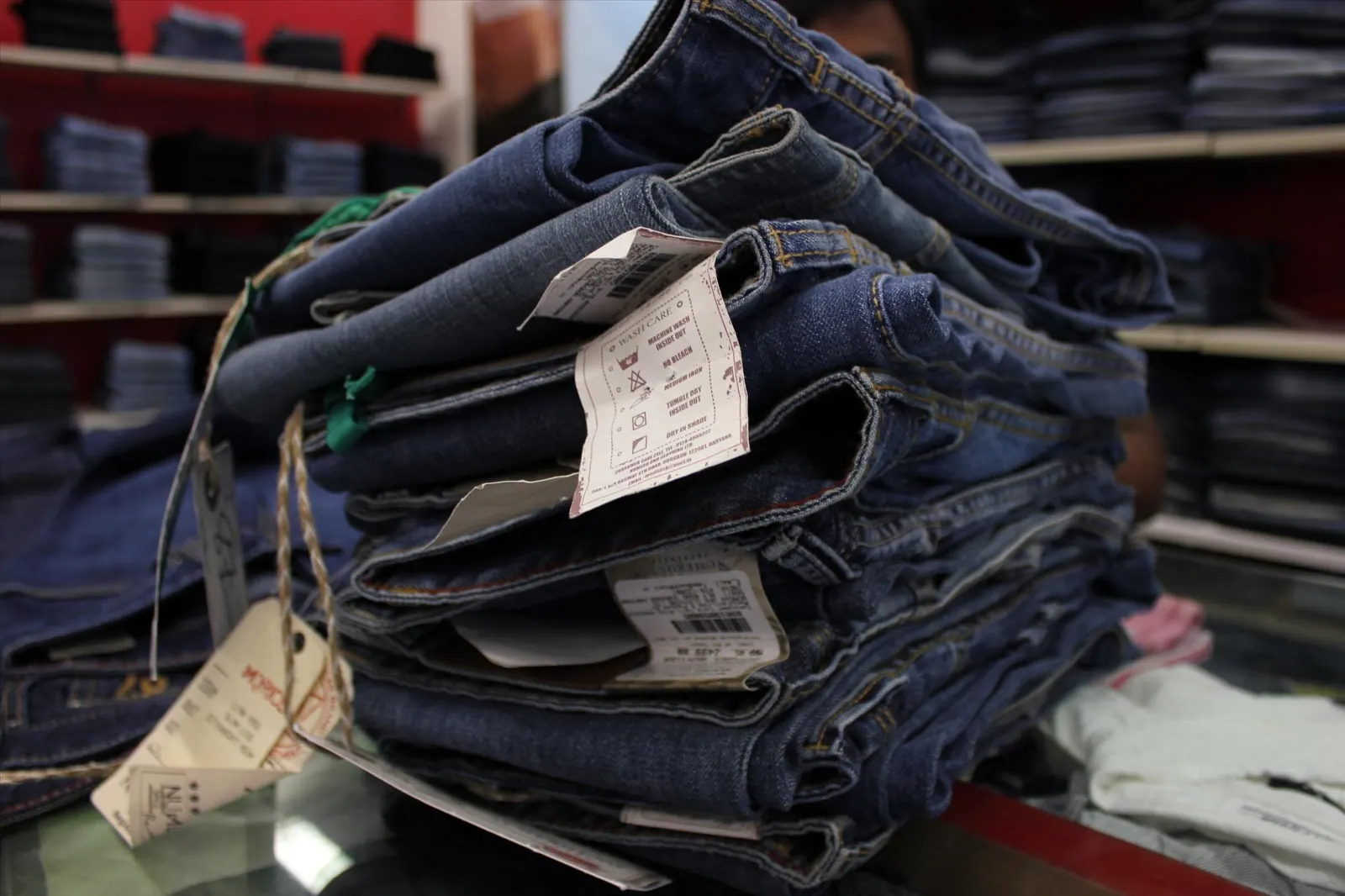
Stack of folded blue jeans with hang tags, showing slightly different shades
Example scope · Finished goods

One shade per carton at packing

The situation: A buyer rejects mixed-shade cartons at audit, so the plant needs proof that every carton is a single band.

Station
Cabinet before the folding table with lane lights per band
Measures
Each finished garment against the PO approved standard
Output
Band printed on the carton label, PO level shade report for the buyer
Extra
Audit trail showing the measured value of every piece in a carton

Beyond apparel

The same measurement principle sorts any product where colour consistency matters:

  • Garment-dyed knits and wovens
  • Yarn cones and sewing thread
  • Leather hides and finished leather goods
  • Ceramic and porcelain tiles (shade and calibre)
  • Printed packaging and labels
  • Food and agricultural produce, with our vision sorting line
What is in the system

One station, built around your line

  • Light-controlled measurement cabinet with standard illuminants
  • Calibrated industrial colour camera or multispectral sensor
  • Certified reference tiles for daily calibration checks
  • Industrial PC running Cerox shade software, with style and buyer profiles
  • PLC, diverters or pick lanes with lane lights, integrated with your conveyor
  • Operator touchscreen showing the band and the reason for every decision
  • Label printer or RFID writer for shade codes on tickets and cartons
  • Lot and PO reports, plus export to ERP or WMS
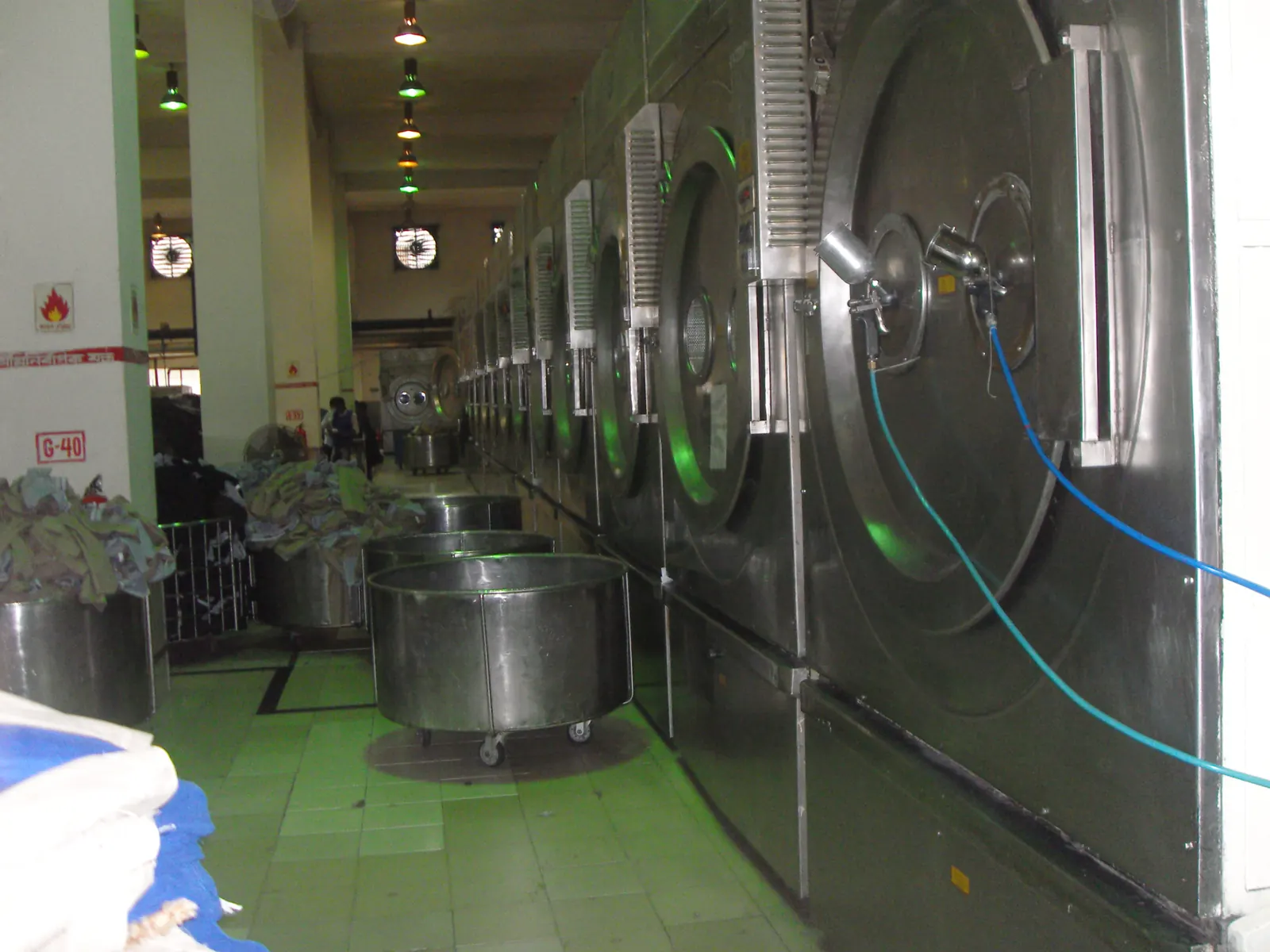
Industrial garment washing machines lined up in a washing factory
In a washing plant the station sits after drying, where garments are dry, cool and ready to be graded.
How we work

Proven on your garments before you commit

Every fabric and every wash behaves differently under a camera. So the project starts with evidence from your own material, not a brochure.

  1. PHASE 1

    Discovery

    A site visit to understand your styles, washes, buyer standards, line rate and where shade decisions are made today.

  2. PHASE 2

    Feasibility study

    We measure samples your team has already graded and show how closely the system agrees with your approver. This is the go or no-go.

  3. PHASE 3

    Pilot station

    One station on one line, running beside your inspectors until the results match and your team trusts them.

  4. PHASE 4

    Rollout and support

    More lines, ERP integration and local support from our Sri Lankan engineering team.

FAQ

Shade segregation questions, answered

What is shade segregation in garment and textile manufacturing?

+

Shade segregation, also called shade sorting or shade banding, is the process of grouping fabric rolls, cut panels or finished garments by their exact colour so that pieces which end up together, in one garment, one carton or one shipment, match. Each piece is compared with an approved shade standard and assigned to a shade group. Pieces outside the buyer tolerance are separated for a decision.

Why do denim garments need shade segregation after washing?

+

Denim is dyed with indigo, which varies from roll to roll and across the width of a roll. Washing processes such as enzyme, stone, bleach and ozone washes amplify that variation, so garments from the same lot can come out visibly different. Buyers expect every carton and every order to be one consistent shade, so washed garments are sorted into shade bands before packing.

How does an automated shade segregation system work?

+

Each piece passes through an enclosed measurement cabinet with controlled standard lighting. A calibrated colour camera or multispectral sensor measures defined zones of the piece and converts them to CIELAB values. The software calculates the colour difference against the approved standard, assigns a shade band or 555 code, sends the piece to the right lane or prints a label, and records the result for a lot report.

Which colour difference formula is used for shade sorting?

+

Textile colour acceptability is usually judged with the CMC (l:c) formula at 2:1, defined in ISO 105-J03. CIEDE2000 is also available. The formula and the tolerance for each shade band are set to match your buyer standard, and can differ per customer or per style.

What is the 555 shade sorting system?

+

The 555 system gives each roll or garment a three digit code, one digit each for lightness, red/green and yellow/blue difference from the standard. A 5 means on standard, and each step up or down represents a fixed tolerance interval. Pieces with the same code can be combined safely, which makes it easy to plan lays in the cutting room or fill cartons with one shade.

Can a camera measure colour as reliably as a spectrophotometer?

+

For sorting, what matters is measuring small colour differences consistently, piece after piece. A calibrated camera or multispectral sensor inside a controlled light cabinet does that well and can measure every piece at line speed. A laboratory spectrophotometer remains the reference instrument, so during the feasibility study we correlate the system against your spectrophotometer readings and, most importantly, against the decisions of your senior shade approver.

Does it work with our existing overhead conveyor or inspection machines?

+

Usually, yes. For garments the measurement cabinet can sit on an existing overhead line or a belt, with diverters or pick lanes after it. For fabric, measurement heads can be added to a fabric inspection frame. The system connects to the PLC that runs your line and can export results to your ERP or WMS.

How is shade sorting different from defect inspection?

+

Defect inspection looks for faults such as holes, stains, broken stitches or slubs. Shade segregation assumes the piece is acceptable and asks a different question: exactly which colour group does it belong to? The two can share hardware, and Cerox also builds vision inspection stations for defects.

How do we start a shade segregation project with Cerox?

+

Start with a conversation and a set of samples: garments or fabric that your team has already graded into shade groups. We run a feasibility study on your own material to show how well the measurement agrees with your approver, then scope a pilot station for one line. Contact Cerox on WhatsApp or at info@ceroxengineering.com.

Send us a few graded samples

Tell us where shade decisions slow you down, and share a handful of pieces your team has already graded. We will show you how the measurement compares.

Photographs show representative denim and apparel plants, not Cerox installations or client sites. Diagrams by Cerox Engineering. Photo credits, via Wikimedia Commons: Denim washing plant by Fahad Faisal, CC BY-SA 4.0; Jeans in different washes by Lion Hirth (Prissantenbär), CC BY-SA 3.0; Manual QA checking by Fahad Faisal, CC BY-SA 4.0; Overhead garment line by Fahad Faisal, CC BY-SA 4.0; Fabric rolls by Fahad Faisal, CC BY-SA 4.0; Cutting room by Fahad Faisal, CC BY-SA 4.0; Stack of jeans by KALX999, CC BY-SA 3.0; Washing machines by Fahad Faisal, CC BY-SA 3.0.